




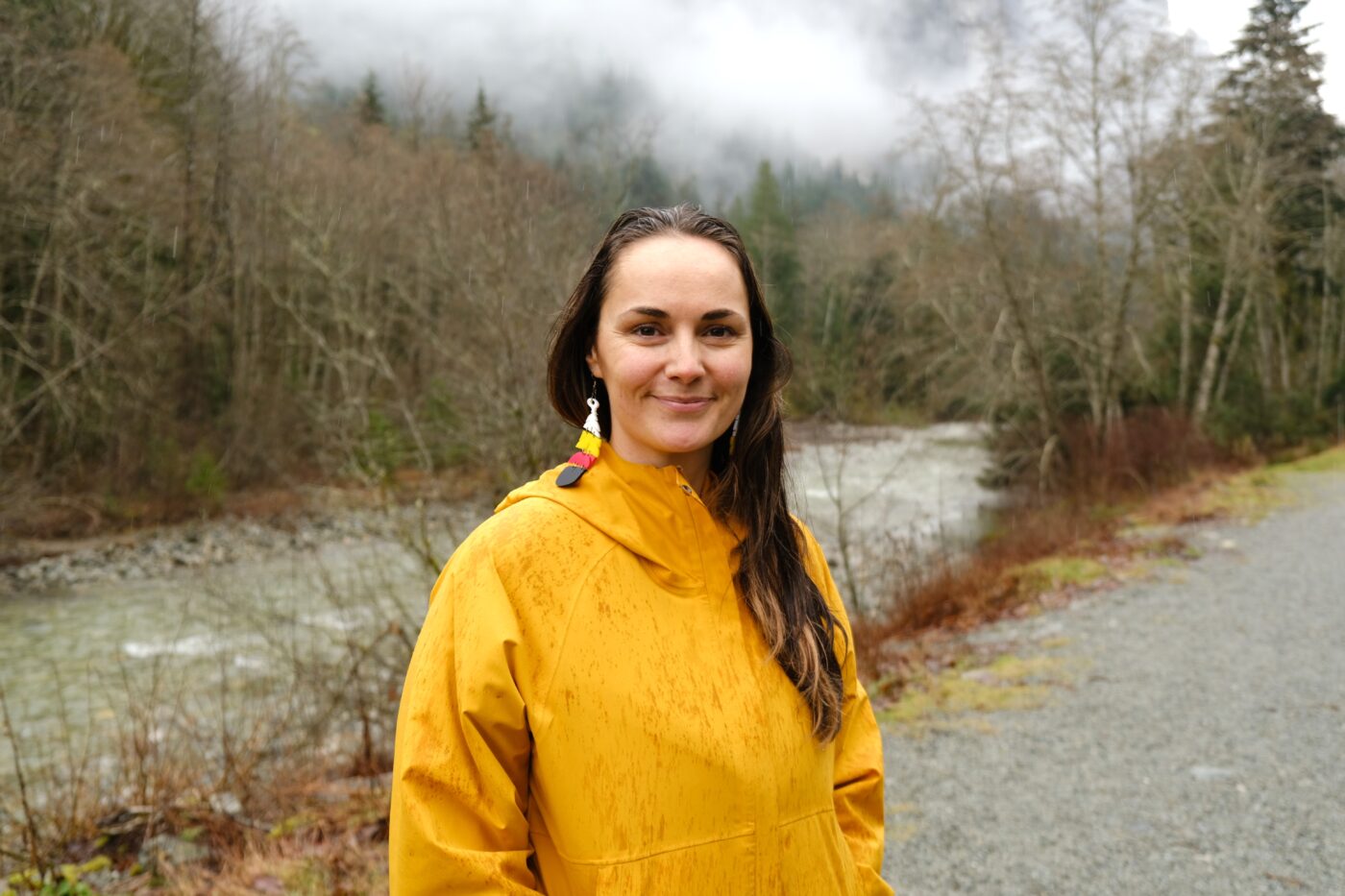
Melissa Arnott has a full schedule. She juggles her full time job at Destination BC focusing on Indigenous relations, tourism and reconciliation, raises two children, and volunteers with Indigenous Women Outdoors. But in whatever spare moments she can find, lunch breaks, evenings and weekends, she’s building something deeply personal, the Manoomin Collective.
Started by Arnott, the Manoomin Collective, is a nonprofit that creates space for all Indigenous people in Squamish to come together. Manoomin is the Anishinaabemowin word for wild rice, which, like the collective, reseeds and grows continuously. The collective connects the urban Indigenous community while celebrating the diversity of their cultures, and offering programming that ranges from powwow practice to traditional crafts workshops.

Arnott is a member of the Batchewana First Nation, an Ojibwe nation in northern Ontario, near Sault Ste. Marie, but she grew up in Calgary, on Treaty 7 territory because of the Sixties Scoop, a systematic process where Indigenous children were taken from their homes by the government and adopted into other non-Indigenous families.
“I grew up in a very lovely family, but I didn’t have the ability to grow up in my culture, in my community,” Arnott said. “When I came out to B.C., about 13 years ago, that’s when I started to really reconnect and reclaim my Anishinaabe culture.”
Living in B.C., Arnott met someone who knew her birth family, allowing her to reconnect with her birth mother, who she has since reunited with. During this time, while living in Squamish, Arnott also learned that her Nokomis (grandmother) is buried in the cemetery behind Totem Hall Preschool.
“I honestly think that my ancestors had been guiding me out to B.C.,” Arnott said.

All of this, especially her reconnection with her birth mother, started Arnott on a “beautiful journey of learning what my Anishinaabe spirituality means to me.” While volunteering for Indigenous Women Outdoors, a non profit which empowers Indigenous women through connecting with the land and each other, Arnott realised how important being in community was to her connection to her Indigenous heritage.
“I started realizing, even more so, that so many of us [Indigenous people] are not living in our home territories, so many folks were not raised in culture because of colonialism,” Arnott said. “Where can we go and be together and share our stories?”
One night, after a dream, Arnott decided she needed to build a place in Squamish for urban Indigenous people to connect through an inclusive space for community events and cultural programming: the Manoomin Collective.
The Manoomin Collective
For the past two years, Arnott worked tirelessly to get things off the ground, balancing this passion project with her other commitments.
“One of the really important things for me being a visitor here on Squamish Nation territory is doing things in a respectful way, honoring their culture and getting their support.”
Arnott has spent many hours with the Sḵwx̱wú7mesh Úxwumixw (Squamish Nation) elders, making connections and listening to their advice, before launching programming.
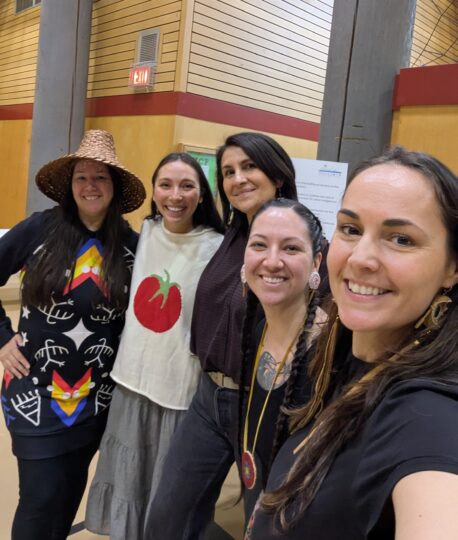
With the help of board members Courtney Milne of the Chippewas of Nawash First Nation and Mohawk from Kahnawákeró Nations, Tessa Antone of the Sḵwx̱wú7mesh Úxwumixw (Squamish Nation), Donna St. Louis of the Nlaka’pamux Nation, Kwewawtennat Virginia of the Sḵwx̱wú7mesh Nation, Coast Salish & Brokenhead First Nation, the Manoomin Collective recently held their first event.
On Jan. 31, the collective launched their open-invitation ‘coming together’ event, with lots of dancing, singing, drumming and crafting.
“I really wanted to start it in a good way with a celebration,” said Arnott. “For folks to have a better understanding of the diversity of different cultures.”
For Arnott, the event was a success, and she was “overwhelmed” by the community support from both the Indigenous and non-Indigenous community. In the near term, subsequent events will focus more on First Nations, Métis and Inuit people, but Arnott says there will be more chances down the line for the wider community to get involved in programming.
Coming up are several events: youth story time on Feb. 22, at the library, powwow practice on Feb. 28 and March 14, a birch bark and quill workshop on March 1, and a beaded lanyard workshop on March 21.
Future Plans
Arnott has big plans for the collective. Right now, the collective relies on volunteers and doesn’t have their own space for programming. In the future, Arnott hopes to employ Indigenous people and build a permanent home where the Indigenous community in Squamish can drop in anytime. As well as building an advisory group, where Indigenous people of all ages can get more involved.
“I feel it like in my heart, just knowing that there’s a space that any Indigenous person who comes to Squamish, whether they’re passing through or they live here, they know that they can go to us for a community and for cultural connection,” Arnott said.
To help make this dream a reality, Arnott is taking a sabbatical this summer, and hopes to work on programming and spend more time with her two kids. It’s the future generations of Indigenous people who are top of mind when it comes to building the collective.
“When I leave this world and go to the spirit world, who’s going to teach my children about their Ojibwe heritage?” Arnott said. “With support from the community and other folks who are deeply yearning for this, together we can build this collective.”
For Arnott, the Manoomin Collective isn’t just about the present, it’s about creating a lasting place that will serve Indigenous families for generations to come.
The collective welcomes community support through financial contributions, supplies, and venue donations. Those interested in donating can contact the collective here.

My name Shirley Lewis really awesome story . I would like to connect to this young lady that made her way home .email…shirleylewis714@gmail.com