





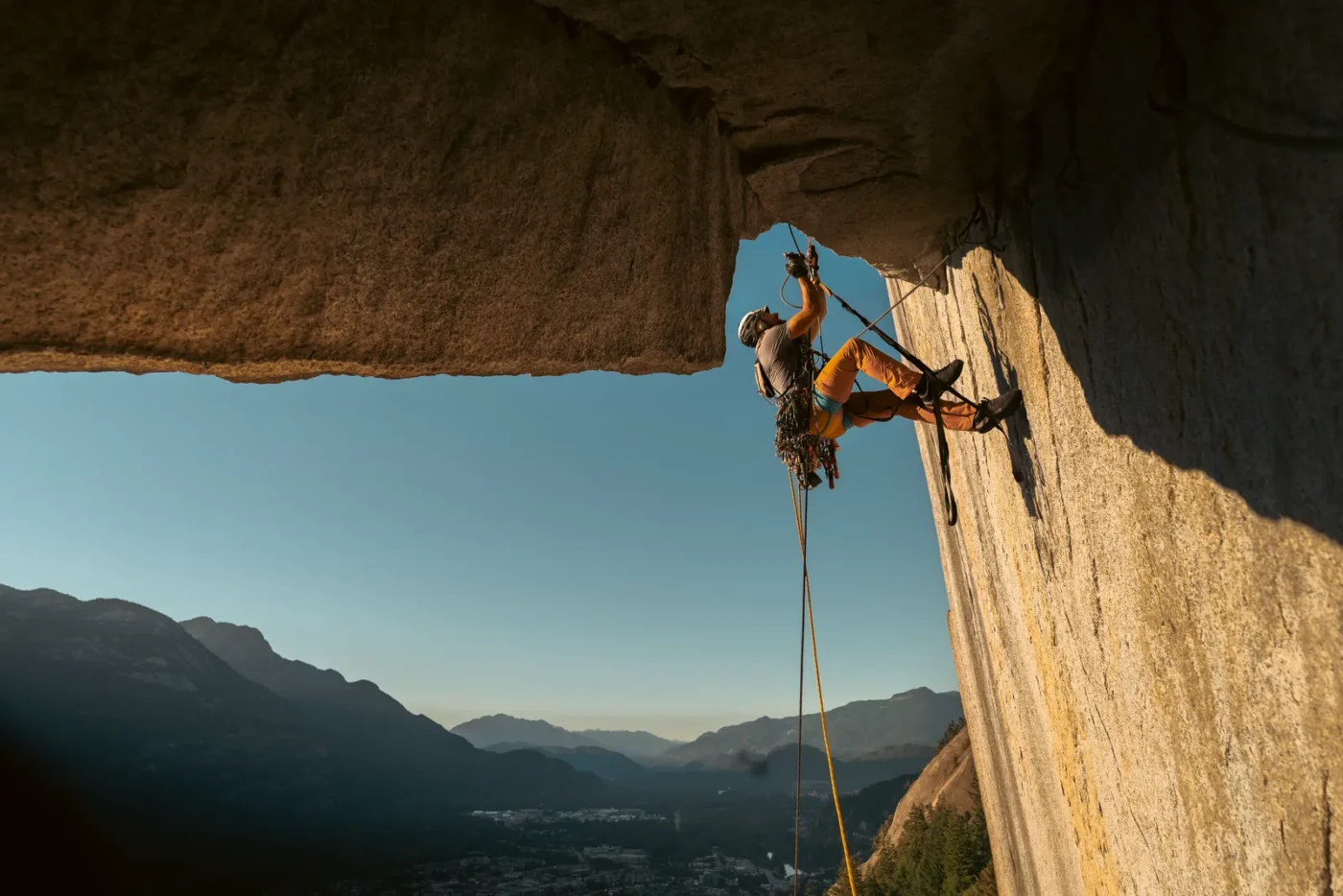
It’s no secret to locals and visitors alike that Squamish is a premier rock climbing destination, but a landmark new study released today puts hard numbers behind it. The Squamish Access Society (SAS) published the first-ever economic impact analysis of rock climbing in the region.
 In 2025, an estimated 460,000 ‘climber days’ (one person climbing on one day) were logged in the Squamish area, generating $25.4 million in direct climbing-related spending. When the ripple effects are accounted for, that figure grows to $45 million in economic impact across British Columbia. Visitors drove the bulk of local spending at $21.1 million, while Squamish residents contributed another $4.3 million.
The study is the most extensive of its kind for a climbing destination in Canada. Researchers spent 128 days in the field counting climbers, conducted surveys at climbing areas, ran an online survey of local residents, and interviewed climbing experts. Economic modelling was carried out by Pacific Analytics, drawing on data gathered by Larose Research and Strategy.
“We have always known that climbing has a tremendous impact on our community’s economy and quality of life, and now we have concrete evidence to show it,” said John Howe, Chair of the SAS Board of Directors.
The report shows peak climbing season runs from May through September, where 59 per cent of ‘climber days’ are from overnight visitors. It also broke down climbers by climbing style, where survey respondents could choose more than one type. Sport climbing topped the list at 80 per cent of respondents, followed by trad climbing at 71 per cent, and bouldering at 58 per cent.
It was most common for visiting climbers to be in their 20’s, while it was most common for residents to be in their 30’s. 35 per cent of resident climbers were over 40.
 The report also showed the impact of climbing on the local population. Three out of five resident climbers moved to Squamish because of climbing, and another 20 per cent said it was a strong motivating factor. 70 per cent of resident climbers spend more than 30 days a year climbing.
“When I was thinking of somewhere to live where I could focus on climbing, Squamish was the obvious answer,” said local climber Ethan Salvo. “There’s nowhere like it in Canada in terms of the variety of climbing styles, and the potential to develop new cutting edge climbs.”
Beyond economics, the study revealed the more intangible, personal impact of climbing. Nearly every respondent, 99 per cent, said that climbing contributes significantly to their physical health and mental wellbeing. The research also highlights the sport’s role in building social connection, a sense of belonging, and a genuinely welcoming community culture.
With Squamish featuring more than 3,000 climbs across every discipline and skill level, it’s widely regarded as the top rock climbing destination in Canada. The report backs this up, with 93 per cent of visiting climbers and 91 per cent of residents said they would strongly recommend climbing in Squamish, even while acknowledging some growing pains around parking, crowding, and limited camping options.

Those concerns are not lost on SAS. “We received hundreds of specific comments from climbers about ways we can address parking and camping, encourage responsible behaviour at the crags, and help disperse climbers to limit crowding impacts,” said Ivan Melisek, SAS Treasurer. “These creative ideas will require new partnerships, and we’re ready to have more informed discussions now with this research.”
The full report is available on the SAS website. SAS says the findings will inform ongoing conversations with climbers, local businesses, and other community stakeholders about managing growth, improving access, and strengthening the partnerships that keep Squamish’s climbing areas thriving.
