





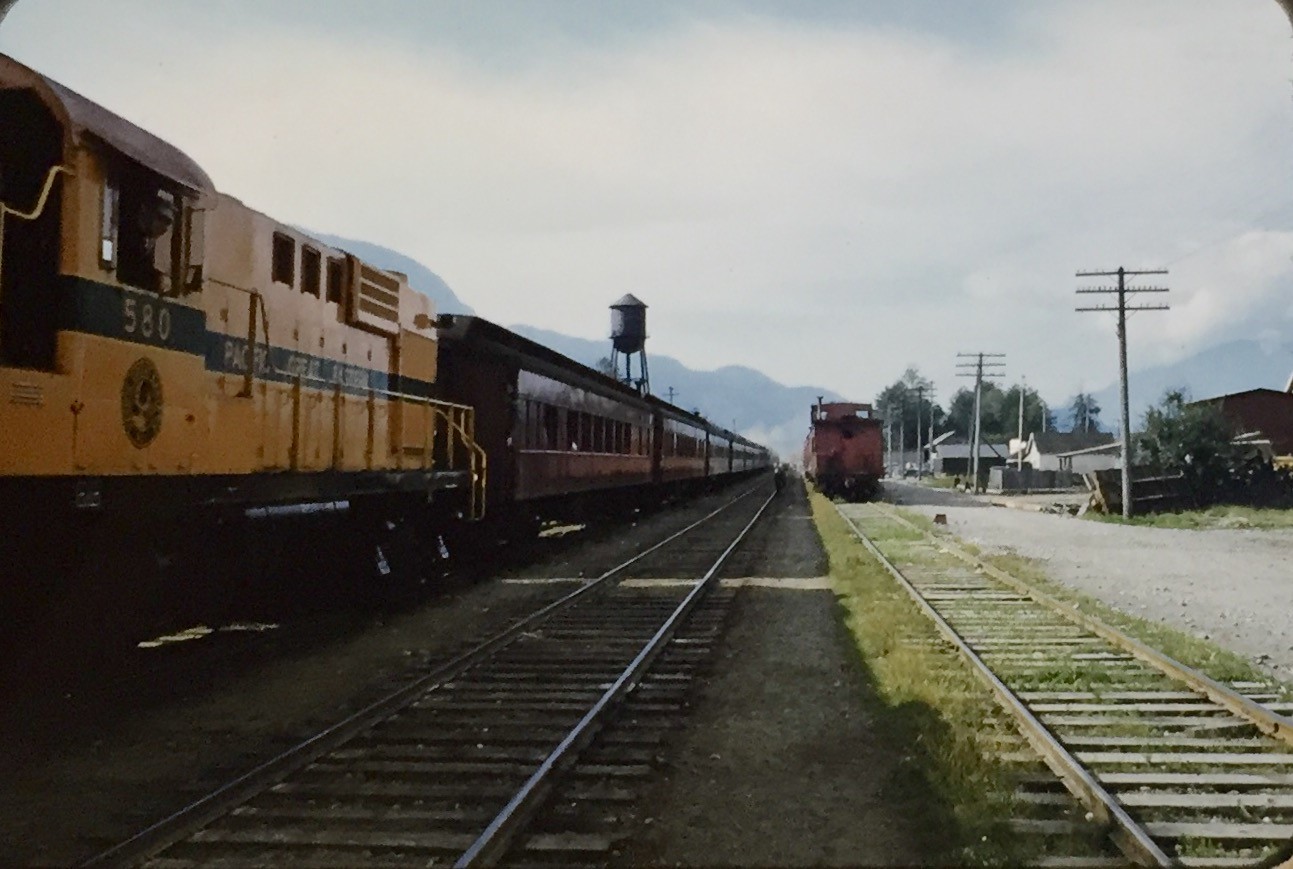
A Vancouver-based non-profit is seeking help from the Squamish-Lillooet Regional District (SLRD) to bankroll a feasibility study into restoring passenger rail service between North Vancouver and Lillooet.

In a press release, Mountain Valley Institute (MVI) formally requested the funding from the SLRD Board, saying it would allow the organization to immediately launch its proposed Sea-to-Sky Near-Term Passenger Rail Study. The full intermediate-level study is estimated to cost $85,000, but MVI says the initial $20,000 contribution would be enough to complete a foundational round of analysis.
Sign up for news alerts from the Squamish Reporter
The basic analysis would include segment-level travel time estimates, capital and operating cost projections, high-level ridership modelling drawn from existing highway traffic data, and a qualitative multi-account evaluation, the press release noted. MVI argues that this is enough to give decision-makers a clear, evidence-based picture of what’s realistically achievable using existing rail infrastructure and modern Diesel Multiple Units.
The pitch comes as Sea-to-Sky transportation pressures show no signs of easing. The press release cited growing congestion, weather-related highway disruptions, safety concerns, and rising demand tied to population growth and tourism, while also pointing to uncertainty around the future of the Squamish Subdivision as an added reason to act.
MVI says it brings relevant experience to the project. The organization’s previous research includes a technical report on a regional rail network for B.C.’s South Coast and a 2024 collaboration with the University of the Fraser Valley on Fraser Valley regional rail. MVI is also currently participating in the Sea-to-Sky Rail Roundtable organized by MLA Jeremy Valeriote’s office, alongside local governments and First Nations representatives.

Sure, let’s do a study. It is appealing to think of a train reducing highway traffic.
But given how slowly trains have to move on that line, it is hard to imagine that there will ever be sufficient ridership to support such a project.
An attractive alternative, though, is to convert that corridor to a Squamish-to-Lillooett multi-use rail trail. Such a trail would be one of the most spectacular in the world, and would attract travellers from all over the globe. It would also support a wide variety of travel-related businesses.
A much, much cheaper and more readily implemented alternative to the Howe Sound highway for commuters and tourists is … fast passenger ferry. Downtown Squamish to/ from Downtown Vancouver in 50 minutes. Cost is several tens of $ millions — vs several $ billions to reshape the rail line for commuter speed and buy all the test of the infrastructure required including rolling stock and a new train station in North Vancouver.
I think that the most feasible public commuter service would be bus. The highway infrastructure already exists. There already exists companies providing bus transportation. Perhaps it would be best to support expansion of those businesses. It costs me about $15.00 for gas to make a round trip to Vancouver in my Corolla. With car pooling the cost could be reduced to about $5.00 per commuter. It is hard to see how any public or commercial service could compete.