




Sierra McCann didn’t grow up around mountains. Raised on the prairies of Saskatchewan, she came out to Vancouver for school, discovered Squamish and mountain biking, and never left. That was over a decade ago. McCann was a late bloomer when it came to outdoor sports, picking up most of her hobbies as she neared her 30s. But what she built once she found her footing here has made Squamish a more welcoming place for riders of every ability.
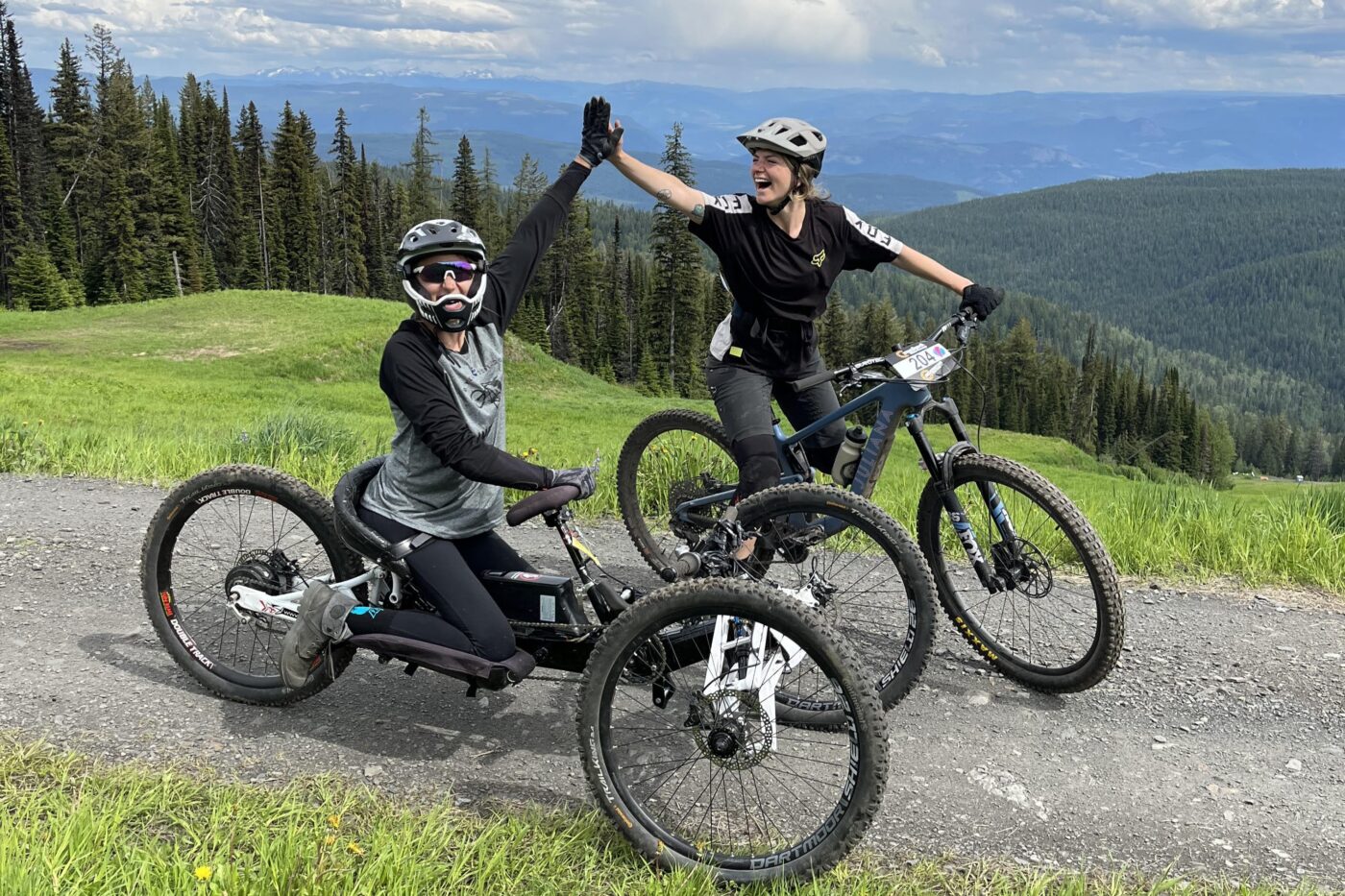
 McCann is the founder of The Squamish Adaptive Mountain Bike Association, or SAMBA, a nonprofit dedicated to getting people with disabilities out on the trails. The organization provides free guided rides, hosts try-it days for newcomers, runs multi-day adaptive camps, and consults on trail accessibility across the region. By day, McCann works as a dental hygienist, running SAMBA in her spare time.
It started in early 2022, when a client mentioned adaptive mountain biking. McCann was immediately hooked on the concept. Around the same time, Squamish hosted one of the first women’s adaptive mountain bike retreats in Canada, led by a 25-year-old wheelchair user named Sierra Roth. McCann showed up to volunteer and found something she had not expected: a room full of women with a wide range of disabilities, most of them mountain biking for the first time, led by a program built by and for people with disabilities. The community building feel instantly drew McCann in.
“It was people with disabilities trying to make it as autonomous and independent as possible,” she said. “Once I saw that I was like, okay, going full in on this.”
 She looked for someone already doing it in Squamish, and couldn’t find anything. So she built it herself, earning her adaptive mountain bike coaching certification, connecting with adaptive riders and organizations across Canada, and eventually receiving a donated demo bike from Bowhead, a Calgary-based company that makes high-performance adaptive mountain bikes. That bike became SAMBA’s first.
One of the things McCann is most passionate about correcting is the outdated image people have of adaptive mountain biking. Most people, she says, picture a wide, three-wheeled trike rolling along a paved path. The reality is far broader. An adaptive mountain bike is any modification to any bike that gets someone outside, whether that means modified cranks, a bucket seat, one-sided gearing for a rider with a prosthetic limb, or an e-assist for someone managing chronic pain. Many adaptive riders are already out on Squamish’s most technical trails, largely unnoticed, she said.
“There’s already thousands of people on the trail riding adaptive mountain bikes that we don’t notice,” she said, “because they’re not this trike style bike that we thought they were.”
SAMBA’s guided rides and try-it days are always free. The organization connects riders to grants, helps people write funding letters, and has even run bottle drives and raffles to raise money for bikes that can cost upward of $25,000. There is no cap on how many times someone can come back and ride with SAMBA on their equipment.
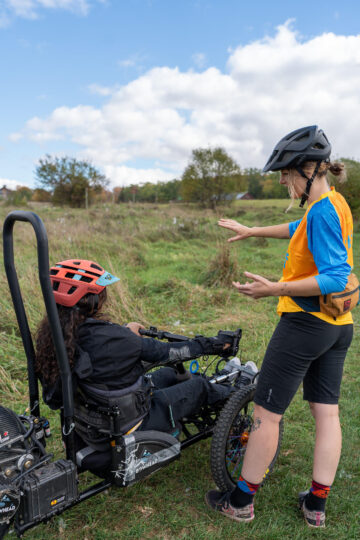
“We’ve had lots of people who have attended an event or a camp and have come back and ridden with us four times in the summer,” she said.
McCann also advocates for trail networks to involve adaptive riders directly in planning conversations rather than making assumptions about what accessible means. Too often, she says, well-meaning able-bodied volunteers want to clear rocks and smooth out features that adaptive riders actually want to ride. “We’re talking about mountain biking,” she said. “That comes with its own set of risks, but that’s what people want.”
McCann does all of this while working full time, and now while raising a two-month-old. Her board of eight includes seven wheelchair users and six certified adaptive coaches, most of them juggling families and full-time jobs of their own. “It is the most fun and most special thing,” she said. “The best day you can have is running one of these events.”
McCann is able-bodied, and on the trail, she is what the adaptive riding community calls an AB, for able-bodied.
“Lots of adaptive riders ride independently, but if a tree falls down you can’t just like pop off and carry your bike over it,” McCann said. “If you approach a bridge and it’s too narrow and it’s the first time riding the trail, it’s nice to have someone there to help out.”
For McCann, that spirit of showing up for each other is exactly what SAMBA is built on. She points out that around 28 per cent of British Columbians have a disability.
“If you live long enough, you will probably have a disability,” she said. “In the mountain biking world especially, caring about adaptive biking and accessible trails is a great personal investment.”
“The more that we partner and work together, the more people that can get out to ride.”
For information on upcoming events you can follow SAMBA on Instagram or check the Website.
