






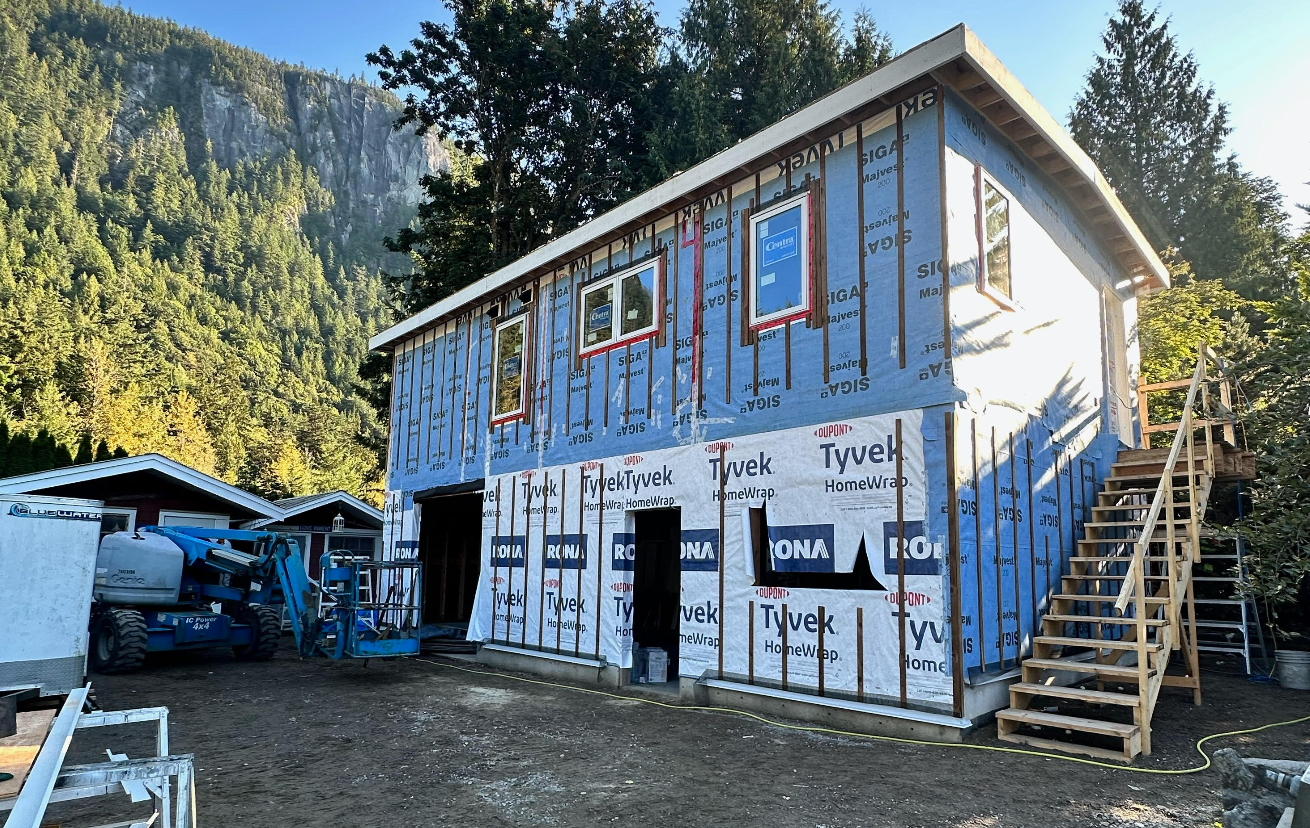
When Ashley Huntley’s mother was diagnosed with stage 4 cancer, her family knew they needed to make a change. The home her parents had lived in for years was too large to maintain, and the thought of selling the property altogether felt too final. Ashley, who already lived in Squamish, started thinking about how they could stay together, without everyone living under one roof.
The answer came from an unexpected place: a construction technology company called Rohe Homes.
View this post on Instagram
“My parents couldn’t physically upkeep the large home anymore,” Ashley says. “So I sold my own home in Squamish, bought theirs, and we decided to build a small unit for them right on the same property.”
The family settled on building a carriage home in the backyard, but with a very limited-access entry, they needed something that could be delivered to the back of the property without affecting the main home or nearby surroundings (including neighbors). They decided on a 730-square-foot lock-up ready kit designed and delivered by Rohe Homes.
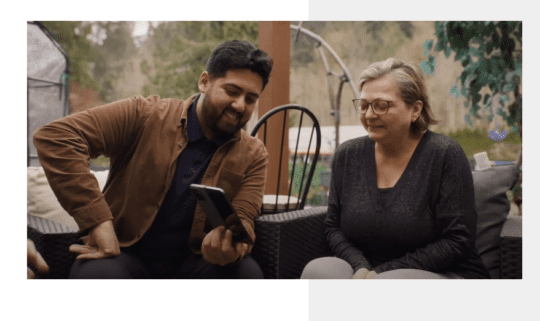
While Ashley says there were a few challenges during the build, the company’s team was responsive and committed to working through the concerns. “They really stuck with us,” she says. “They heard our concerns, helped resolve them, and in the end, we’re really happy with the outcome. We’re now in the final stages of the build.”
The result is more than a home. It’s a way to keep the property in the family while allowing Ashley to better care for her parents as they age. For her, it’s the ideal blend of independence and proximity, made possible by an approach to housing that’s gaining attention across British Columbia.
“Our process saves homeowners six to nine months”
Rohe Homes didn’t begin in an office boardroom. It began in a village in India, where company founder Rohan Kulkarni saw firsthand the challenges people faced with traditional housing construction: long timelines, high costs, and systems that hadn’t changed in decades.
“It felt archaic,” says Kulkarni, an architect by training. “There had to be a smarter way to build.”
Back in Canada, Kulkarni partnered with longtime friend Salik Khan, whose experience with public policy and First Nations housing brought another layer of insight. Together, they launched Rohe Homes with a simple question: What if building a home could be more like assembling a car, standardized, efficient, and accessible?
Their answer is a modular building system that uses prefabricated building components manufactured in a factory, including plumbing, electrical, and structural elements. Once a site’s foundation is ready, the home is delivered and assembled in as little as six hours.
The entire process, from concept to completion, takes between 13 and 18 months. That’s nearly a year faster than many traditional builds.
“We estimate our process saves homeowners six to nine months of time,” Khan says. “And by doing up to 50 percent of the work in the factory, we can also control costs and quality far more effectively.”
For those seeking to reduce costs even further, Rohe offers a lock-up kit as part of its Lotus Series. Homeowners can purchase a partially completed structure and complete the work themselves, either with the assistance of tradespeople or their own hands.
Modular solutions for real-world needs
In Sechelt, a couple with a large property saw an opportunity to help their community. Working with Rohe Homes, they added two rental units, one 1,000 square feet, the other 500, without needing any major permits or specialized transport. It was a fast, efficient way to add housing to a tight market.
In Fintry, where wildfires destroyed homes in 2021, Rohe was able to provide a modular building kit within a year, despite the lack of local trades and building materials. For the family who lost everything on-site, it was a much-needed lifeline.
In Squamish, Ashley’s project reflects a growing trend toward multigenerational living. With the help of Rohe’s lock-up kit, she created a home for her parents in her backyard while moving into the main house herself. By doing some of the final work themselves, the family also managed to keep overall costs lower.
Whether it’s for rental income, housing recovery, or caring for aging parents, Rohe Homes’ modular approach is proving to be more than just convenient. It’s practical, scalable, and rooted in community needs. “This kind of housing offers security, savings, and community,” Kulkarni says. “It’s about giving everyday people the tools to be their own developers.”
A new kind of homebuilding
For Rohe Homes, the future of housing isn’t just about speed or affordability; it’s about empowerment. By rethinking how homes are built, the company aims to put more control into the hands of citizens and families.
That means:
1, Pre-designed and permit-ready options that reduce approval wait times.
2, On-site assembly that can be completed in just a few hours.
3, Standardized pricing starting at $170 per square foot (not including delivery and installation).
4, Flexible designs that can be adapted for carriage homes, garden suites, duplexes, and more.
It’s an approach that meets the needs of a changing province, where affordability, aging demographics, and land-use pressures demand creative solutions.
For Ashley Huntley, it also holds a more personal significance. “We’re right where we hoped to be, home, together,” she says. “And that means everything.”

4 Comments