


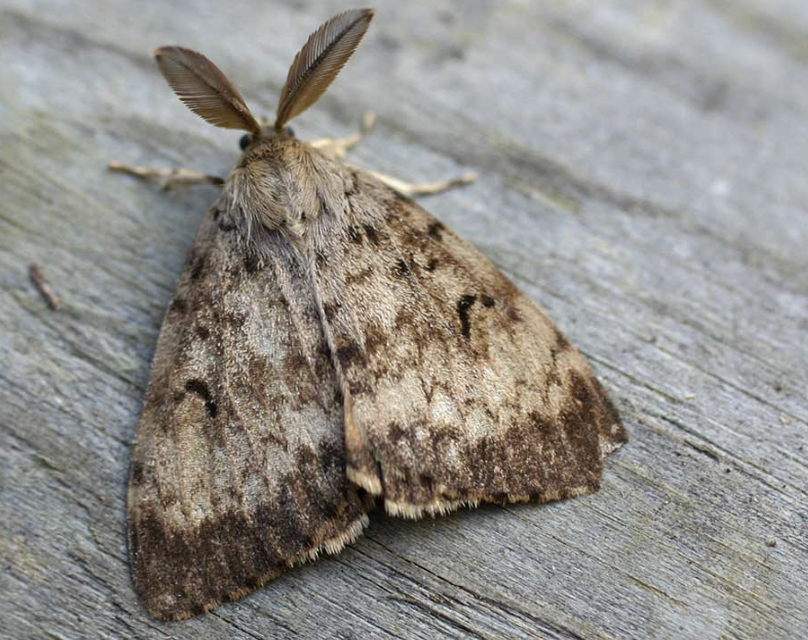
Squamish and Delta residents will see aerial spraying this spring as the province moves to combat invasive spongy moths, a serious pest in their caterpillar form that can devastate forests, crops, and residential trees, according to B.C. Government.

In Squamish, 121 hectares west and south of Buckley Avenue and Third Avenue—including areas down to just south of Vancouver Street and along the Squamish River—are slated for treatment. Delta will see 36 hectares around Beach Grove, near Boundary Bay, treated under the program.
Spraying is planned between April 1 and June 15, 2026, with three aerial applications expected at each site. An informational open house will also be held for residents in the treatment areas. Requests for applications for the 2026 treatment plan have been submitted, the B.C. government noted.
Spongy moths, also known as Lymantria dispar, feed on leaves and can defoliate entire forests and farmlands. “Without treatment, it is highly likely spongy moths will become permanent in the province, with serious impacts on agriculture and forestry,” the province noted.
The treatment uses Bacillus thuringiensis var. kurstaki (Btk), a naturally occurring bacterium that affects only caterpillars. It has no known toxic effects on people, pets, birds, or other wildlife. Btk has been approved for spongy moth control in Canada since 1961 and has been used regularly in B.C. since 1979, most recently in 2024, according to provincial records.
