


The Squamish River has been officially recognized as a Key Biodiversity Area — a designation that places it among the most ecologically significant sites on the planet.

The newly declared Squamish River KBA covers the rivers and shorelines of the Squamish, Mamquam, and Cheakamus rivers, centered near Brackendale, where rich riparian forests and dynamic floodplains sustain a remarkable range of wildlife throughout the year.
The site earned its global status largely on the strength of a single, unassuming plant. Roughly 10% of the world’s known population of Roell’s Brotherella Moss — a rare species that thrives in moist, forested conditions — is found here, making the area one of the most critical strongholds for its survival anywhere on Earth.

“This little moss might seem ordinary, but it’s a fascinating and uniquely Canadian piece of our shared natural heritage,” said Peter Soroye, KBA Assessment and Outreach Coordinator with Wildlife Conservation Society Canada.
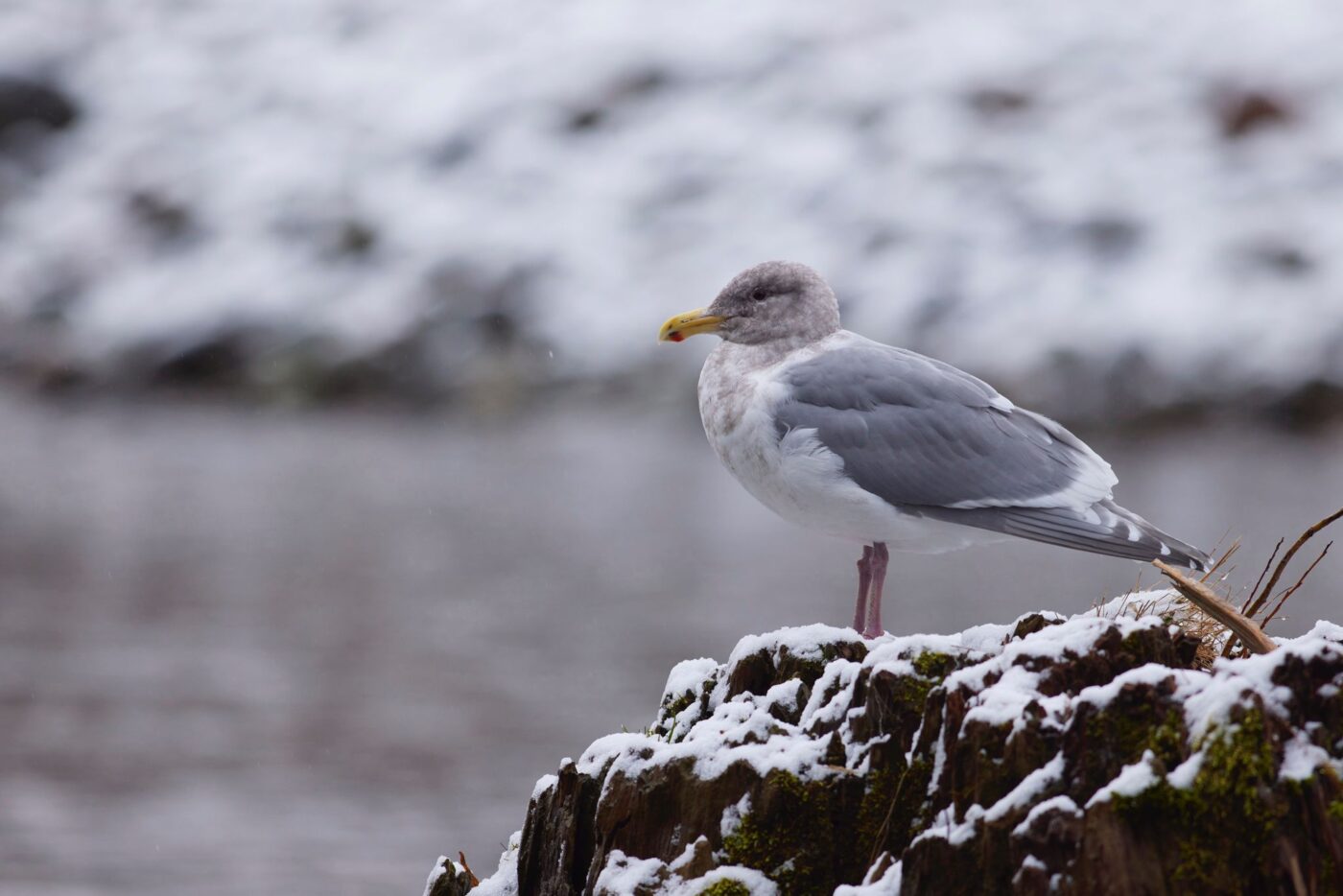
The area also holds national significance for the Glaucous-winged Gull. Winter surveys conducted between 2012 and 2023 recorded a median count of 3,408 individuals — about 2.6% of Canada’s entire population — with peak counts surpassing 5,000 birds. Chum and Coho Salmon spawn in the rivers each season, drawing hundreds of Bald Eagles, along with American Dippers, mergansers, goldeneyes, and the nationally Endangered Black Swift.

For longtime residents, the recognition is long overdue. “60 years I’ve been living in Squamish and have seen many changes in our local environment,” said John Buchanan, a local naturalist and KBA Caretaker. “Nice to have been around long enough to see the Squamish River Estuary now getting the care and recognition it has long been overdue for.”
The KBA designation does not carry legal protection on its own, but serves as evidence to support land-use planning, conservation advocacy, and community stewardship. The site sits within the traditional territories of the Coast Salish First Nations and the Squamish (Skwxwú7mesh-ulh Temíx̱w) First Nation.
Rémi Torrenta, BC Projects Coordinator for Birds Canada, noted the broader ecological context of the area. “As part of the Howe Sound Biosphere Region, and with its position as a migration corridor for birds moving through the Pacific Flyway, the Squamish River Estuary provides critical habitat for many wildlife species.”
Monitoring and stewardship of the site is ongoing, led by Nature Squamish, formerly the Squamish Environment Society, alongside BC Nature and other conservation partners. The Squamish River KBA now joins hundreds of similar sites identified across Canada as part of a global initiative to map places where conservation efforts can have the greatest impact.
