For years, aesthetic medicine often approached facial aging through a relatively straightforward lens: restore volume where volume had been lost. But according to Dr. Willem Gouws, a physician specializing in aesthetic medicine in Squamish, that approach is beginning to evolve.
Dr. Gouws is the owner of Lift Medical Aesthetics clinic based in Squamish. Increasingly, patients are seeking results that look more subtle, balanced, and natural rather than noticeably “done.” At the same time, physicians are beginning to rethink how facial aging is assessed and treated.
“In many cases, patients are not simply losing volume,” says Dr. Gouws. “There are structural changes happening throughout the face that need to be understood first.”
According to Dr. Gouws, one of the biggest shifts in aesthetic medicine today is the move away from “volume-first” treatment toward what he calls a more structural, anatomy-driven approach to facial rejuvenation. That shift in thinking is influencing how some practitioners now approach non-surgical facial rejuvenation: moving away from standardized cosmetic protocols and toward more individualized, anatomy-driven treatment planning.
Understanding Facial Aging Beyond Volume Loss
According to Dr. Gouws, one of the biggest misconceptions in aesthetic medicine is that all visible signs of aging should be treated the same way.
“The face doesn’t age in one layer,” he explains. “Skin quality changes, collagen decreases, ligaments weaken, tissue positioning changes, and muscle activity shifts over time.”
These changes are often most noticeable in the lower face, where patients commonly report concerns such as loss of jawline definition, heaviness around the jowls, skin laxity, facial descent, and changes in overall facial shape.
“In many patients, lower facial aging is not primarily a volume problem,” he explains. “It is often a support problem involving tissue descent, ligamentous change, skin quality deterioration, and structural imbalance.”
Historically, many of these concerns have been treated primarily with filler. While Dr. Gouws says filler continues to play an important role in aesthetic medicine, he believes the future of facial rejuvenation lies more in diagnosis, sequencing, and individualized planning than in any single product or procedure.
According to Dr. Gouws, this is where many patients begin to experience what is sometimes referred to as “filler fatigue” — progressive heaviness, widening, or loss of natural facial definition despite repeated treatment.
“When structural support and tissue quality are not addressed first, simply adding more volume can sometimes worsen lower facial heaviness rather than improve it,” he explains.
“The important question isn’t just what treatment to use,” he says. “It’s understanding what’s actually driving the aging process in that specific patient.”
A Structure-First Approach to Rejuvenation
Dr. Gouws describes his philosophy as a “structure-first” approach to facial rejuvenation: focusing initially on tissue support, skin behavior, collagen remodelling, and facial balance before considering volumization.
“Volume has a role,” he explains. “But volume should support structure — not replace it.”
Rather than focusing immediately on volume replacement, Dr. Gouws says his treatment philosophy often begins by improving tissue quality and structural support.
“The objective is not to change someone’s face,” he explains. “It’s to improve tissue quality and restore support in a way that still looks natural.”
At Lift Medical Esthetics, treatment plans often incorporate advanced energy-based technologies, collagen-stimulating treatments, ultrasound-guided injections, and regenerative approaches tailored to the individual patient rather than standardized protocols.
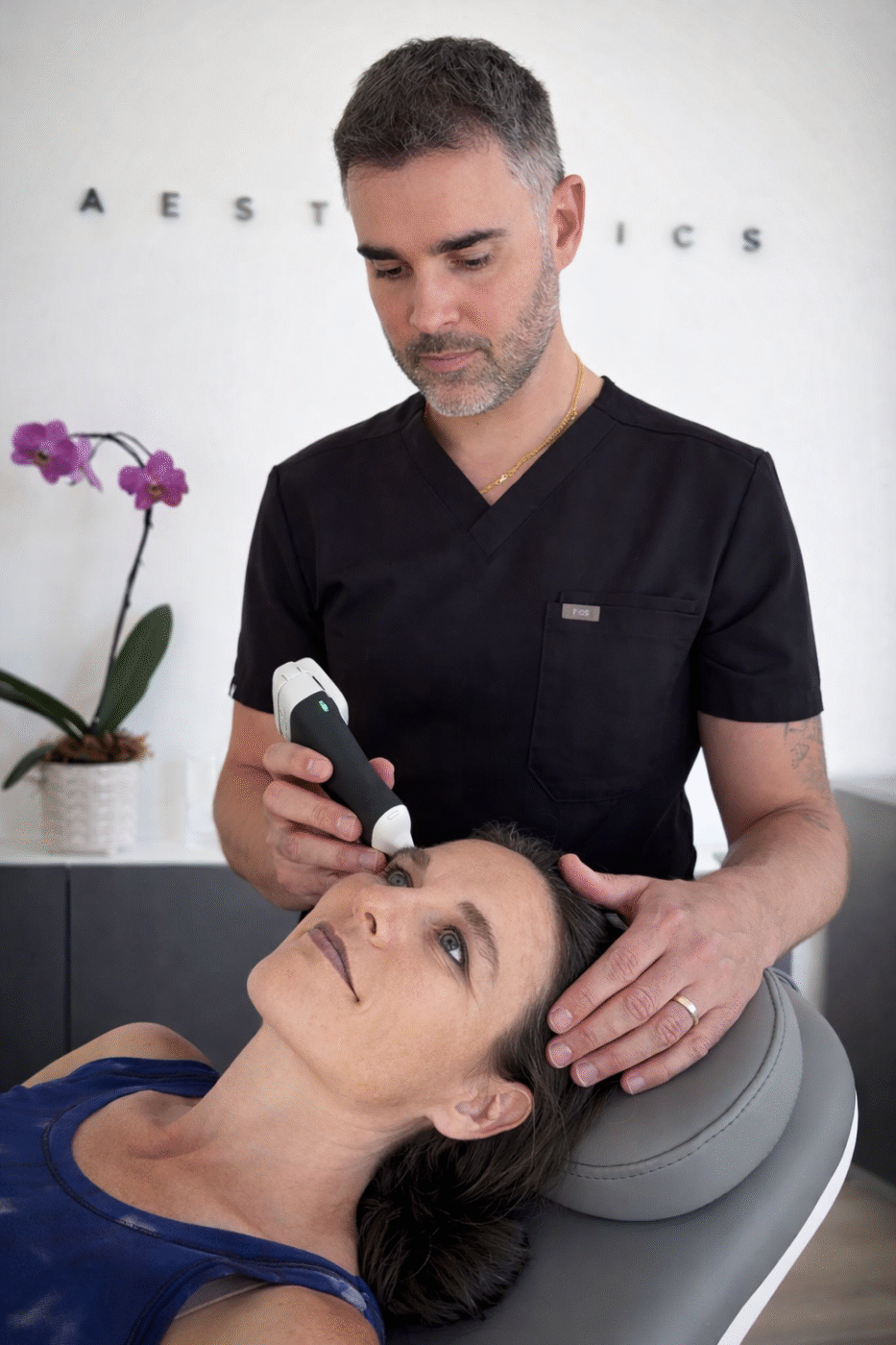
One of the clinic’s primary technologies is QuantumRF, an advanced tissue remodelling platform designed to improve skin tightening, contour definition, and collagen remodelling beneath the skin’s surface.
“Filler absolutely has a place,” says Dr. Gouws. “But it shouldn’t automatically be the starting point for every patient.”
The Shift Toward Tissue Remodelling
While facial rejuvenation remains a major focus of the practice, many of the same tissue-remodelling principles are increasingly being applied to body treatments, using advanced technologies such as QuantumRF 25, which are designed to improve skin tightening, tissue contraction, and collagen remodelling.
Dr. Gouws also utilizes ultrasound-guided injections for filler and biostimulator treatments, allowing for real-time visualization of facial anatomy during treatment planning and injection.
“Ultrasound allows us to better understand tissue layers, vascular anatomy, structural support points, and product placement in a way that simply wasn’t possible historically,” he explains.
“No single treatment does everything,” he says. “The key is understanding which tool is appropriate, when to use it, and when restraint is the better decision.”
Why Patients Are Seeking More Natural Results
According to Dr. Gouws, patients themselves are becoming increasingly informed and selective about aesthetic treatment.
“There’s greater awareness now that more treatment doesn’t necessarily create a better outcome,” he says. “Patients are asking more thoughtful questions about long-term results and facial balance.”
That shift has contributed to growing demand for individualized aesthetic medicine focused on subtle enhancement rather than dramatic transformation.
As a result, consultations at Lift Medical Esthetics place significant emphasis on assessment, diagnosis, and long-term strategy before treatment recommendations are made.
Dr. Gouws believes one of the most important changes occurring within the industry today is philosophical rather than technological.
“There’s a growing movement toward restraint,” he says. “Most patients don’t want to look altered.”
“The best aesthetic outcomes are often the least obvious,” says Dr. Gouws. “Patients still want to look like themselves. They simply want to look healthier, stronger, more rested, and structurally balanced.”
An Anatomy-Driven Philosophy
Originally trained in South Africa before completing postgraduate anesthesia training through the University of Alberta, Dr. Gouws spent more than 14 years working in emergency medicine and anesthetic care before transitioning into aesthetic medicine.
That medical background continues to shape his approach today.
“Aesthetic medicine sits at the intersection of anatomy, precision, and artistic judgment,” he says. “My background taught me to approach procedures carefully, systematically, and with respect for underlying anatomy.”
Today, his practice focuses on advanced non-surgical facial rejuvenation using individualized, combination-based treatment planning designed to support natural-looking, long-term outcomes.
Importantly, he notes that not every patient is necessarily an ideal candidate for non-surgical treatment alone.
“In some cases, structural aging becomes advanced enough that surgery may ultimately provide the best outcome,” he explains. “The responsibility is to guide patients honestly and appropriately rather than simply offering treatment.”
As aesthetic medicine continues to evolve, Dr. Gouws believes the future of facial rejuvenation will increasingly move toward anatomy-driven diagnosis, structural preservation, tissue remodeling, and individualized long-term planning rather than isolated cosmetic procedures.
“The future of aesthetics is not about making faces look different,” he says. “It’s about restoring structural harmony in a way that still looks natural.”
About Dr. Willem Gouws
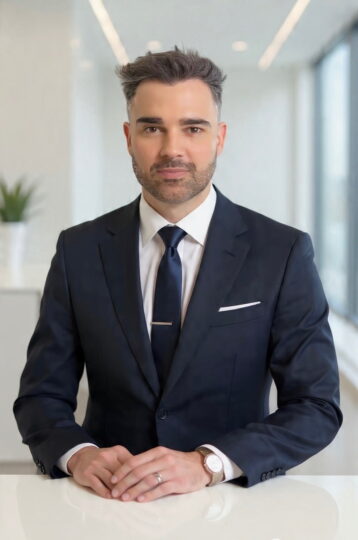
Dr. Willem Gouws is a Canadian physician specializing in advanced aesthetic medicine with a focus on structural facial rejuvenation, tissue remodelling, and anatomy-driven treatment planning. Based in Squamish, British Columbia, he provides individualized, anatomy-driven treatment planning designed to support natural-looking, long-term outcomes.
To book a consultation, visit liftmedicalesthetics.com.