


Full construction work on the supportive housing building planned for 39900 Government Road is now targeted to begin in late 2027, BC Housing told Squamish council at its June 23 meeting. The long planned affordable and supportive housing project continues through permitting, while funding for its second building, a below market rate housing project, remains unresolved.

Letizia Romei, Acting Director for Regional Development in the Lower Mainland for BC Housing, told council that sitework would begin in late summer or fall of 2026, but the target for full construction start on the supportive housing building “would be late in 2027, and that’s due to significant site work that would need to occur on site prior to the end of construction.”

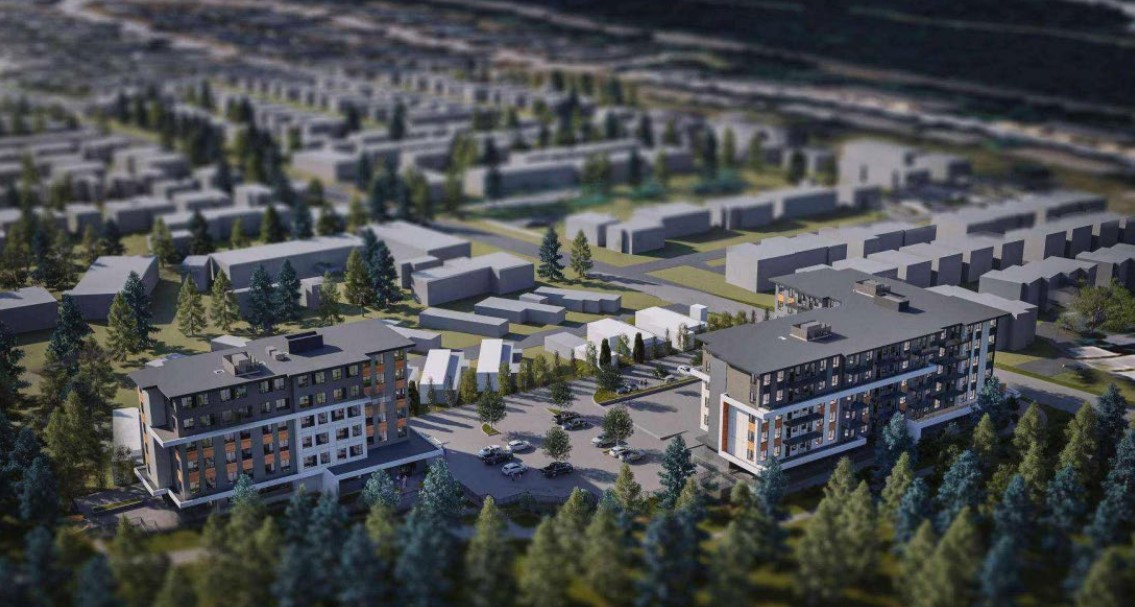
The site, on the southeast edge of the Northyards neighbourhood, is proposed to hold approximately 165 new homes across two six storey buildings. The first, a 65 unit supportive housing building operated by Squamish Helping Hands Society, is fully funded through the province’s Supportive Housing Fund and includes a central kitchen, indoor and outdoor common areas, 24/7 staffing and on site parking for vehicles and bicycles.
The second building, intended to offer 85 to 100 affordable rental homes ranging from studios to three bedroom units, does not yet have a confirmed funding source after a 2025 provincial funding call was paused earlier this year. Housing Squamish, the non-profit behind that building, is now pursuing other funding options while the District continues to advance its development permit application to keep the project ready to move once financing is secured.

The District has already waived permitting fees and frontage works for the project and allocated $690,000 in capital funding toward site servicing, drawn from the federal Housing Accelerator Fund. The project is also exempt from development cost charges and amenity cost contributions.
BC Housing outlined community engagement efforts dating back to June 2025, including 190 letters mailed to neighbours within 100 metres of the site, two newspaper ads in the Squamish Chief, two in person information sessions that drew 73 attendees, and 76 feedback forms. A further 43 inquiries have come through BC Housing’s community relations inbox. The feedback was compiled into a Communications and Engagement Summary Report covering five recurring themes. Who will live in the building and how residents are selected, how supportive housing differs from shelters or transitional housing, safety and neighbourhood integration, the site selection process, and parking and traffic impacts.

Several of those themes surfaced directly in council’s questions following the presentation. Asked about the fencing shown in the renderings, Romei, of BC Housing said it “is kind of a standard approach to this type of building. It is for safety and security from an operational perspective,” while Cluny MacPherson, BC Housing’s Director of Supportive Housing Delivery, added that the intent was to give residents “a comfortable, private outdoor space” and pointed to “the notions of privacy, comfort, and security.”
Councillor Andersen raised the building’s exterior design, noting the grey and brown palette shown in the current renderings and asking whether other facade treatments could be considered given Squamish’s overcast climate. Staff responded that the development permit review was underway and that “we’ll certainly work with the applicant team and consider the guidelines in our review.”
On how the supportive housing building will operate, BC Housing staff confirmed services are intended only for residents of the building itself. “The program would be headed for the residents of that residential building only, and the services would be tailored sort of internally… to meet the needs of these residents who reside at that building,” MacPherson said, adding that any future change in use would remain subject to zoning and permitting rules since “BC Housing is the owner of the property.”
On tenant selection, BC Housing described a coordinated access and vulnerability assessment process rather than a waitlist, calling it “a vacancy matching process,” and said priority would go to people already connected to homelessness serving agencies in Squamish. “The priority here is to address the homelessness trends within Squamish,” said MacPherson, noting the program is informed by local data on housing need.
Communication with neighbours emerged as a strong theme among councillors. “Wherever we can over-communicate is better than under-communicating,” said Councillor Stoner, who also flagged that the District’s own affordable housing webpage is out of date. Councillor Greenlaw added, “more communication is better than less,” while Councillor Pettingill urged that “making sure people are aware and feel able to participate” should remain a priority as the project moves through construction.
Councillor Andersen also raised concerns on behalf of neighbours in the mobile home park west of the site, who lost a row of trees during site clearing and have raised drainage and maintenance questions about the boundary strip, describing them as “supportive and important neighbours that have been there a while” and recommending direct follow up from the project team.
Next steps include finalizing a 60 year lease and an Operations Management Plan for the supportive housing building, both of which will return to council for consideration, along with continued work on subdivision registration, servicing agreements and building permits. The lease for the affordable rental building will follow once a funding source is confirmed.


I am surprised that this project has been deemed more important than the Long Term Care facility that was planned for Loggers lane and has been cancelled, and will be “revisited” in the future. There are literally hundreds of aging seniors in this community who are on The List for placement. These are people who have lived and worked in our communities for most of their lives who are being shuffled to care homes in the Vancouver area. They have paid their share of taxes and supported the communities north of Lions Bay. People with aging loved ones should be outraged. I know I am and can speak from experience after having to deal with The System, still am.
Pennie I agree with you 100 percent. This council don’t have their priorities inline. They have $22 plus million on the upgrades on the rec centre mostly on Managers state of the new offices and upgrade on entry way. Squamish district is in deficit of $85 million plus.