



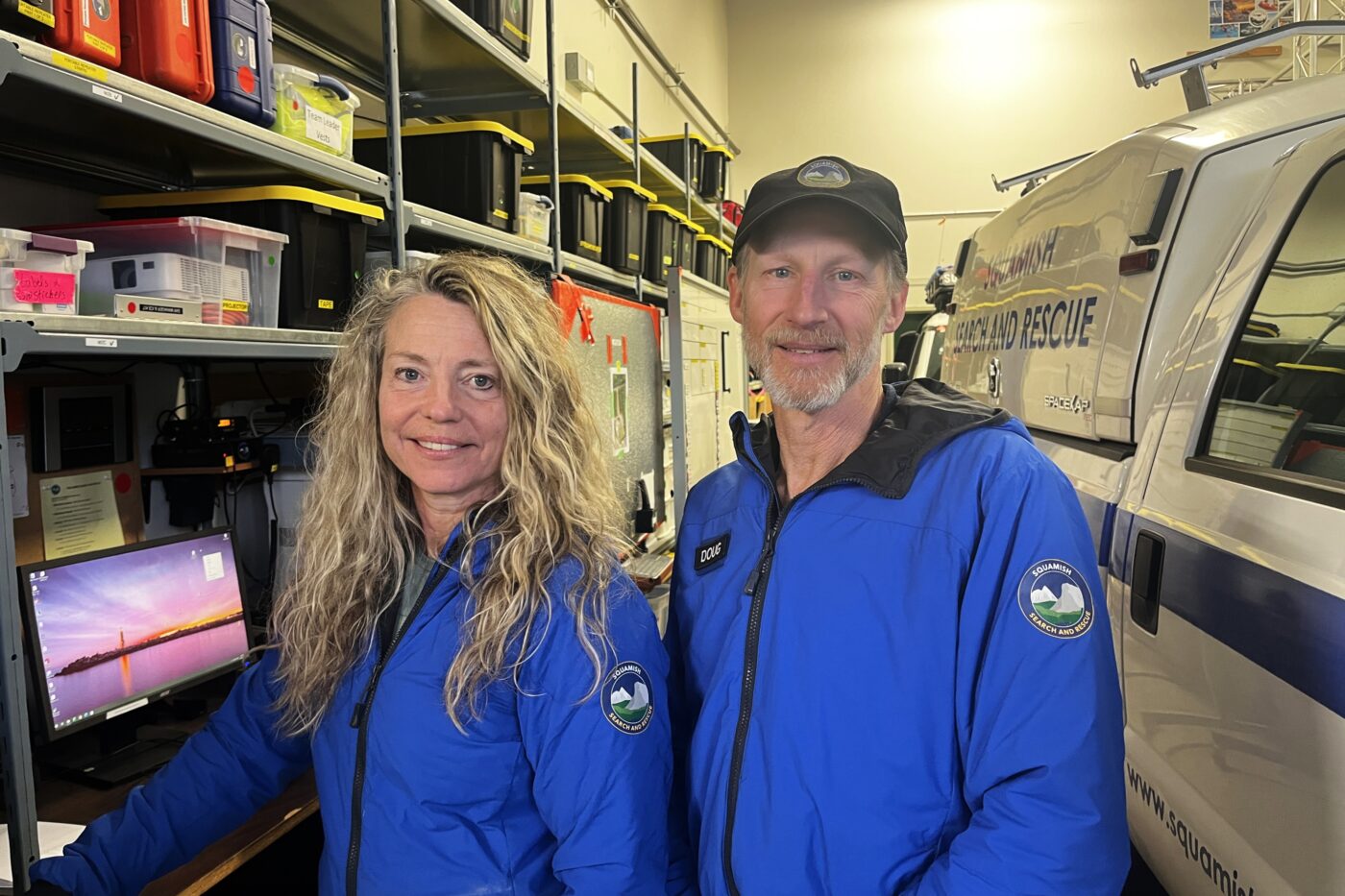
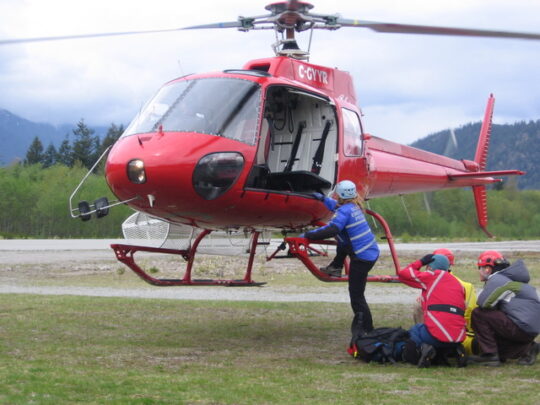
On day seven of a 21 day climbing trip in 1990, Doug Woods found himself in a nightmare situation. His climbing partner, roped to him, fell into a crevasse and broke both legs. Woods managed to stop the fall and hauled his partner out, but they were stranded deep in the Coast Mountains with no way out. The 442 Transport and Rescue Squadron, based in Comox, had to fly in a helicopter and hoist both Woods and his partner out of the steep, icy terrain.

Scenarios like this play out more often than people realise. The Squamish Search and Rescue (SSAR) is one group of volunteers dedicated to helping people in the backcountry. Al Bird, a local teacher, created the group in 1975, after seeing the need for an organized team capable of performing complex backcountry rescues. He trained up a group of skilled climbers and searchers to work within the local emergency services structure. Originally, it was administered by the District of Squamish, but since 2011, SSAR has operated independently, giving the organization control over its own funding decisions.
When someone dials 911 from the backcountry today, the call routes to a tasking agency that coordinates police, fire and ambulance response. If search and rescue is required, the tasking agency contacts the Emergency Coordination Centre in Victoria, which loops in the local SAR team.
“It always looks really exciting on the news,” said Woods, now a 30-year SSAR volunteer. “But there’s always planning. We do organized rescue. Not improvised rescue.”

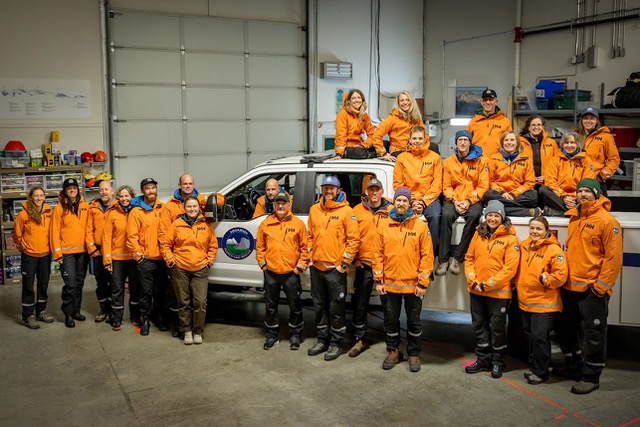
30 years after being pulled off a glacier, Woods is one of 73 volunteers keeping that system running. Among them is Michelle Bech, a semi-retired nurse practitioner, who has given more than 20 years to the organization. Volunteer positions at SSAR range from management, to team lead, to equipment coordinator.
For Bech, the pull toward search and rescue runs parallel to her medical career. “People come into the hospital scared, and you’re like, it’s okay, I got this, I can help you out here,” she said. “It just feels good to be able to do that for other human beings.” She sees the same instinct at work across the entire SSAR team. “Everybody just wants to help out.”
When Bech moved to Squamish in 2002, she got involved in the climbing community, where she met John Howe, one of the original SSAR members from 1987. Howe encouraged her to join, and it was at the team’s training sessions, then held out of the old RCMP building, that she first crossed paths with Woods, who was teaching the radio course. “I remember you very distinctly,” she told him.
In addition to rappelling down cliff faces for rescues, Bech helped build some of SSAR’s administrative foundations, and spent almost a decade on the board. After a 10 year break from the board, she recently rejoined.
SSAR’s response area is vast, extending south from Porteau Cove and Deeks Lake to Whistler’s southern boundary (Daisy Lake) in the north. This includes popular tourist areas like Stawamus Chief and Murrin provincial parks, the Sea to Sky Gondola, and the entire Tantalus mountain range.
The job looks very different from when Woods and Bech started. They recalled being dispatched on the local answering service, using pagers, and relying solely maps and compasses. “I don’t even know how we did it,” Bech said.
Although SSAR volunteers still carry maps and compasses as a precaution, modern GPS allows them to pull up a subject’s location on their phone, before they’ve even left the house.
But this increase in technology has led to increased demand for SSAR calls. Woods attributes this to a few factors. Partly due to easier connectivity in the wilderness on cellphones, but also to technological dependence, crippling people’s ability to navigate in the backcountry if their devices run out of battery or fail.
When Bech started out 20 years ago, she reckons SSAR responded to 30 calls a year. Last year, they responded to 130, with an average of 14 SSAR volunteers responding to each call.
“I had 457 hours last year,” Bech said. “That came out to 60 days, which is like three months of full-time labour.”
Woods clocked over 650 hours, half doing tasks and training, the other half administrative. “I come here to the compound and there’s others already here working on stuff,” Woods said.
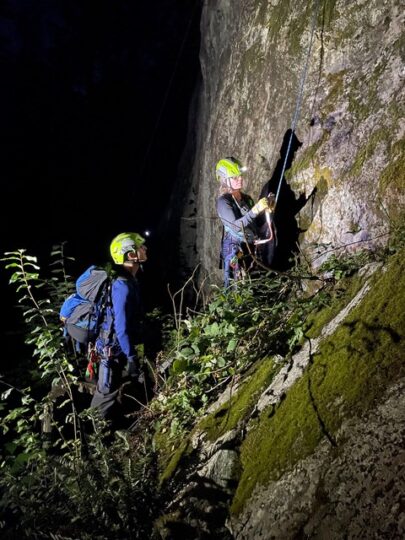
Every new volunteer has to go through the same ground search and rescue training, a standardized provincial program. It amounts to roughly 80 hours of instruction, where volunteers learn search techniques, navigation, rope systems, personal safety and other important skills. It’s capped off with an overnight exercise where volunteers are dropped in the wilderness with minimal gear.
“I got a bad deal,” Bech recalled. “There was a very mossy wet side of the road that I ended up being on, while the other people were on the higher side… I certainly could not get a fire going.”
But the training doesn’t stop there. Members continue ground training once every second week in the evening. Members of the many specialized teams; swiftwater, rope, winter, helicopter, and drone, have more bi-weekly training sessions. Woods described the skills as perishable, so members are constantly training in order to keep them sharp.
For both Bech and Woods, volunteering is partially about community, but mostly about helping people.
Bech recounted a time where her team was helicoptered in near Brohm Ridge to help someone with a broken ankle in the dead of winter.
“The helicopter left, and then the storm just intensified, so we ended up staying overnight in a snow cave,” she said. “The subject was really warm, because he had nice thermal gear. He was snoring away, having a great sleep, and the rest of us, we had some minimalist stuff.”
For Woods, a memory that he returns to is the rescue of a school-aged boy on the back side of Stawamus Chief. The boy had wandered off from his school group, and got stuck on a ledge. SSAR was able to scramble up to the boy, securing him with a harness, bringing him down safely to the trail.
“The last time I remember seeing him, he was at the bottom with the rest of his school buddies, excitedly reenacting his rescue,” said Woods. “I laughed when I saw that… I think now he’s probably a SAR volunteer somewhere.”
Not everything about the volunteer work gets easier. “Those stretcher carries, those late nights, they’re harder as you get older,” Bech said. But she sees other roles as the path forward: the drone team, the board, the quieter work that keeps the organization running. “There will come a time,” she said. “I guess I’ll figure that out.”
It’s that giving back to the outdoor community that keeps both Bech and Woods returning each year. Woods still thinks about the squadron who flew in to save him in 1990.
“After volunteering with SAR for 30 years, I’m still paying it forward.”
