


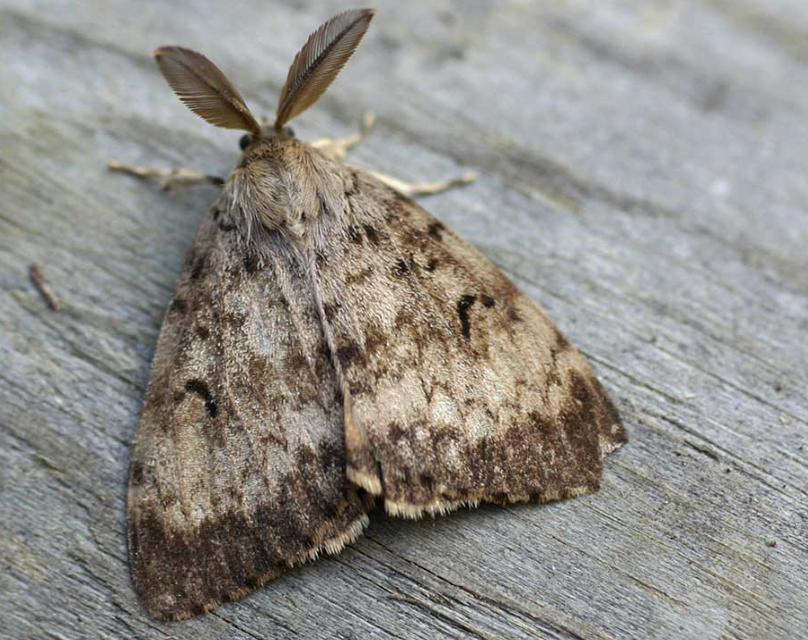
More than 120 hectares of Squamish will be sprayed from the air this spring as the provincial government moves to wipe out a growing population of invasive spongy moths threatening local forests and farms.

According to the press release, the Province will treat 121 hectares in Squamish — spanning west of the intersection of Buckley Avenue and Third Avenue, to the edge of the Squamish River, and to just south of Vancouver Street — between late April and June 30, 2026, weather permitting.
Sign up for news alerts from the Squamish Reporter
Spongy moth caterpillars strip leaves from trees, causing defoliation across forests, parks, crops, and residential areas. If left unchecked, the insects can spread across the province, putting agricultural and forestry trade at risk and causing broader ecological damage. According to the press release, moth numbers in Squamish have been increasing for more than two years.
The treatment will use a product called Foray 48B, whose active ingredient — Bacillus thuringiensis var. kurstaki, or Btk — occurs naturally in soil and is commonly used in organic farming to control caterpillar pests. Health Canada has approved Btk for spongy moth control since 1961, and B.C. has used it since 1979, most recently in 2024. The Province has been issued a pesticide use permit to apply it across residential, commercial, federal, and public lands within the treatment areas.
Three separate applications are planned, each seven to ten days apart. Spraying is expected to begin after first light and wrap up before 7:30 a.m. each day. Weather could cause delays or cancellations on short notice.

According to the press release, Btk affects only the digestive systems of caterpillars and has no effects on people, pets, birds, or other wildlife. Still, residents who wish to limit their exposure are advised to stay indoors with windows and doors closed during each application and for at least an hour afterward. Washing hands after going outside and rinsing any fruits or vegetables from the treated area before eating them is also recommended.
Residents with health or environmental concerns related to the spraying can find more information on the Province’s spongy moth website.
