







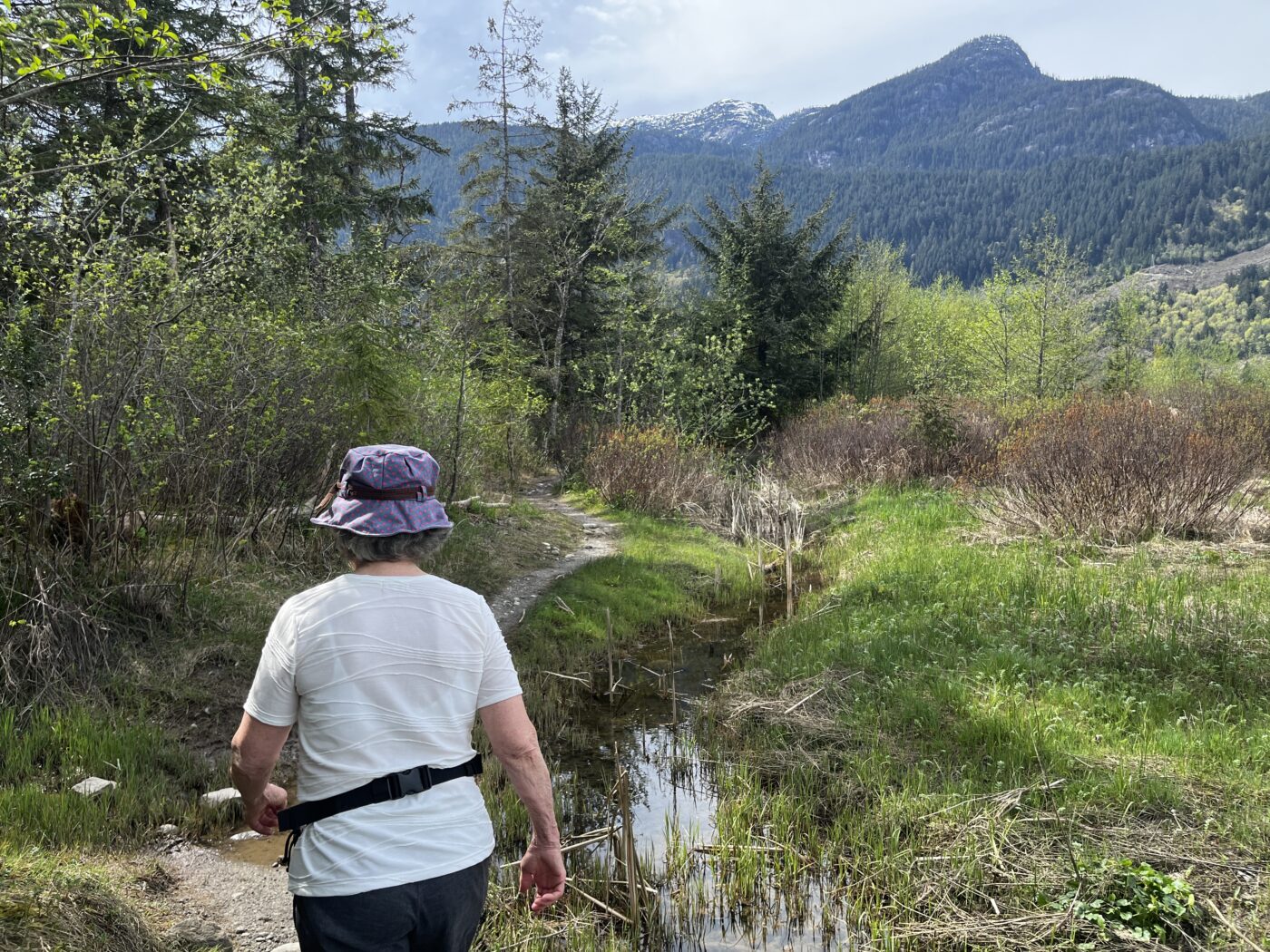
Nature Squamish, recently renamed from the Squamish Environment Society, has been watching over the ecosystems of the Sea to Sky corridor since the 1980s. Where a group of determined local residents used community-gathered bird data to help halt the development of a deep-sea coal port in the estuary. That same grassroots spirit drives the organization today.
 With a small board of directors and roughly 35 members, Nature Squamish runs a remarkable range of programs: monthly bird counts, toad surveys, eagle counts, bat monitoring, nest box cameras, a wildlife connectivity mapping project, and an ongoing effort to document the full biodiversity of the region using iNaturalist. What binds it together is a dedicated group of volunteers committed to keeping Squamish’s natural beauty intact.
“As individuals we have the opportunity to make a difference. I can actually put my phone down for maybe an hour a day and save myself five hours a week to do some good,” said Niall Bell, the coordinator for the monthly Squamish bird counts.

The organization is powered by a group of dedicated volunteers, who often expand to new projects. If someone comes with an idea and the energy to lead it, Nature Squamish will try to make it happen.
Counting birds, building community
Niall Bell moved to Squamish from South Yorkshire, England, in January 2025, and immediately set about giving back. He and his partner deliberately set aside savings so they could volunteer full-time for their first six months, throwing themselves into every Nature Squamish project they could find. Within a year, both had joined the board of directors. Bell now leads the monthly Squamish bird counts, a community science protocol that has run continuously since 1991.
“We didn’t want to move here and just sort of land here. We wanted to give something back. We didn’t just want to kind of take,” said Bell.
 The count takes place on the second Sunday of every month. Volunteers meet at a downtown brewery early in the morning, divide into four groups covering the spit, downtown, an east route near the isolated marsh, and a northern route along the central channel, and spend three to four hours recording every bird they encounter. When Bell first participated, seven people showed up. Now the count regularly draws 20 to 25, including birders who drive up from Vancouver each month.
Bell has worked to modernize the program, building a public data portal where all historical records can be viewed and analyzed. Patterns are already emerging. Bell said species with similar ecological niches tend to rise and fall together, suggesting shared environmental drivers. The data also reveals a decline in local bald eagle numbers.
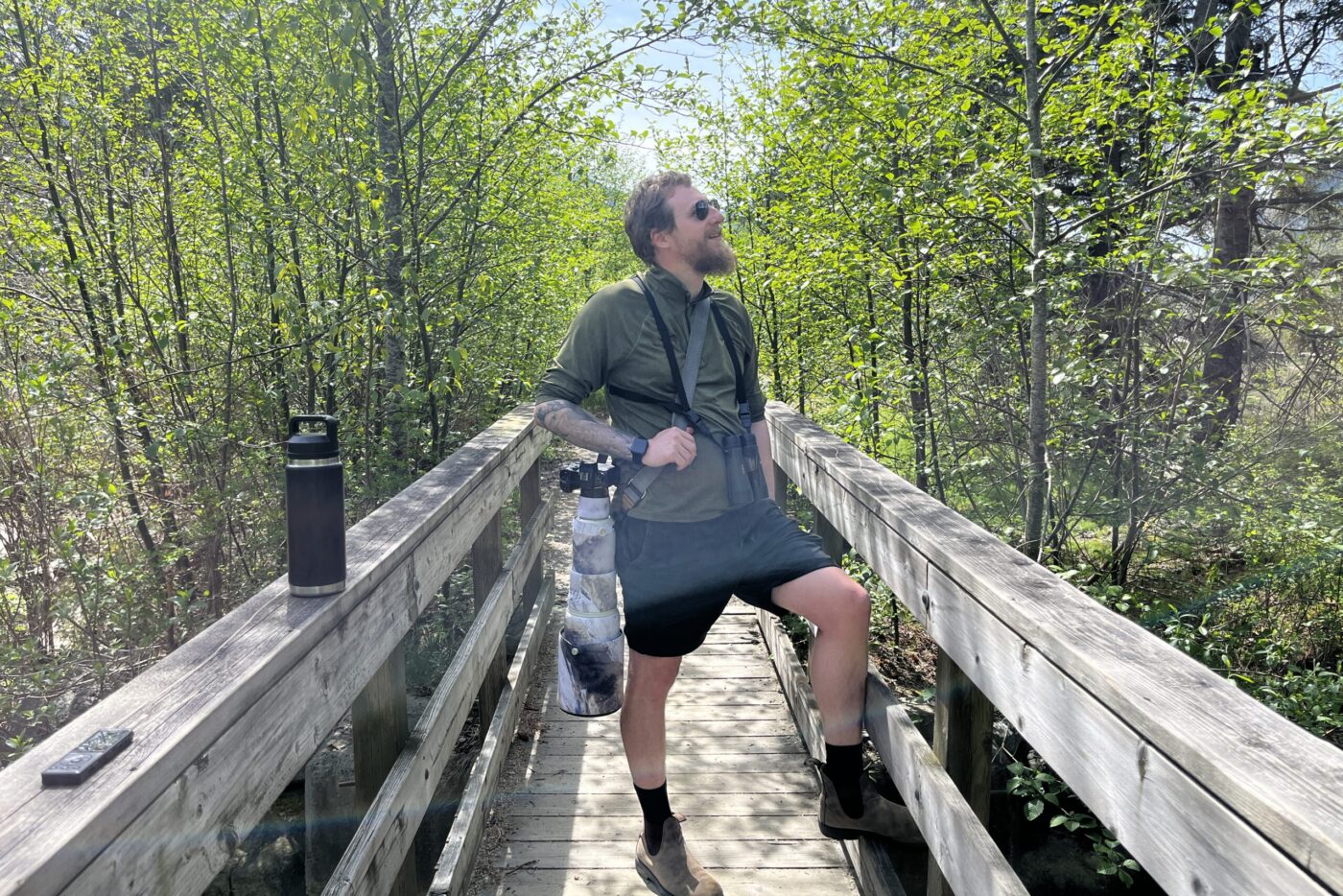
“It’s a fantastic resource. It’s from the community. It’s longitudinal. It’s been running in the exact same way pretty much since 1991. Anyone can look at it,” said Bell.
Bell said the count’s long-term value is already proven, as it was this same dataset that helped build the case for halting the coal port development in the 1970s and securing the estuary’s designations as a wildlife management area and important bird area. For Bell, community science is a core part of why he volunteers at all.
“With platforms like iNaturalist and eBird, we can, as community scientists, gather so much rich information and it makes a real difference. I always liked the idea of being a scientist. I can do it in my spare time as a hobby. And that’s just fantastic,” said Bell.
Bringing back the pollinators
Caroline Slade is one of the founding volunteers behind Pollinator Friendly Squamish, a brand-new initiative that has been running for only a few months. The project aims to earn Squamish an official bee city designation by creating habitat, educating the public, and building measurable commitments reviewed annually.
A recently retired nurse of 40 years, Slade has been chasing insects since childhood, growing up in a desert, she was captivated by ants and beetles before most kids her age had picked up a hobby. That curiosity followed her through decades of moves, beekeeping with an urban cooperative in Toronto, night walks looking for salamanders with a naturalist club, birding trips to Point Pelee, and eventually three years in Saudi Arabia, where she hiked every Saturday photographing desert wildflowers and beetles until she had amassed over 2,000 images for a visiting botanist.

She arrived in Squamish in 2017 and has been volunteering with the local nature group ever since, counting bald eagles on the dike each morning and afternoon as part of a citizen science project. Pollinators, though, are where her heart is. She is currently completing a course through Oregon State University on how to scientifically collect and pin bees, contributing specimens to a province-wide atlas of which bees live where and which plants they depend on.
She is also quick to challenge a common misconception. Pollinators are far more than bees, they include butterflies, moths, beetles, flies, wasps, hummingbirds, and bats. Roughly two thirds of the fruits, vegetables, and nuts humans eat rely on them.
“Every two of your three bites of food is because of a pollinator,” said Slade.

There are multiple threats to the worlds pollinators though. Climate change disrupts the timing between flowers and the insects that need them, habitat loss, invasive species like Himalayan blackberry crowding out native plants, and pesticides, particularly neonicotinoids, which Europe banned in 2018 and Canada still has three of them in active use.
Pollinator Friendly Squamish is starting at street level. The group is approaching businesses along the main corridor to plant pollinator-friendly species in their planters, and plans to launch a seed-sitters club asking residents to overwinter plants at home so they’re ready for spring. The longer-term vision is a pesticide-free pollinator pathway running from Feather Park to the high school farm.
“We want a beautiful, blooming city from spring to fall. Leave your stems, leave your leaves. The messy garden is what we’re looking for,” said Slade.
Mapping biodiversity, one observation at a time
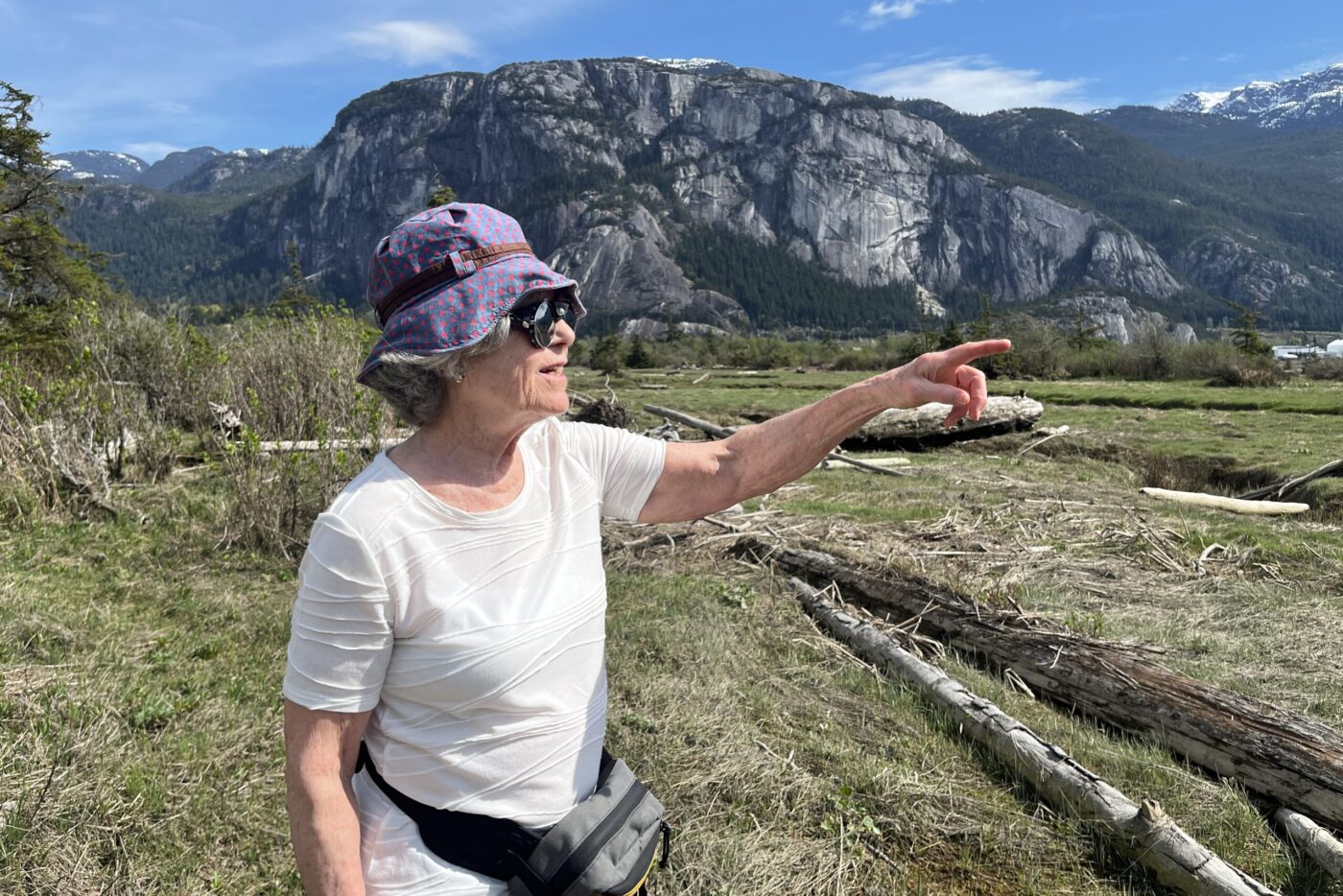
Judith Holm joined Nature Squamish around 2016 and spent nine years on the board before stepping back this year. She still leads the Biodiversity Squamish project, an initiative that uses the iNaturalist platform to build a comprehensive, research-grade species record for the region, from the southern boundary of the District of Squamish northward through the Squamish-Lillooet Biosphere Region.
Holm, will turn 80 this summer and still spends time in the alpine she loves, in fact, she came to the project through mountaineering. In the late 1990s she climbed less documented peaks in the company of a German botanist, learning fieldwork as she went. When she moved to Squamish at 65, she began photographing plants during ski tours into the backcountry and found that compared to Victoria, where she had lived for over 40 years, almost nothing had been formally documented.
“Here, there was so little knowledge in fauna. Very few. There was some bryophytes, mosses were known, but it was very limited data compared with Victoria. And so I thought, this feels really worthwhile to start documenting it,” said Holm.
She spends at least an hour every day on iNaturalist, confirming other users’ observations, welcoming newcomers, and coaching contributors on how to make their records scientifically useful. Multiple photos, precise GPS coordinates, and notes on the surrounding habitat all increase the chances of an observation reaching research grade, which means it is automatically shared with the Global Biodiversity Information Facility and becomes available to scientists worldwide.
The platform has connected her with specialists she would never otherwise have reached. She submitted a slime mold observation and within 15 minutes received detailed guidance from a researcher in Tasmania whose entire career had been devoted to that organism.
“If not for iNaturalist, I would never have had in 15 minutes this advice from somebody in Tasmania. It’s really pretty cool,” said Holm.
“I’ve been doing it now since 2017, so it sort of adds up. I feel like I’m doing something positive for the future. It feels really worth doing,” said Holm.
Together, these three volunteers represent what Nature Squamish is all about, people from very different backgrounds, who all care about the natural world, working together to keep the Squamish they know and love intact.
