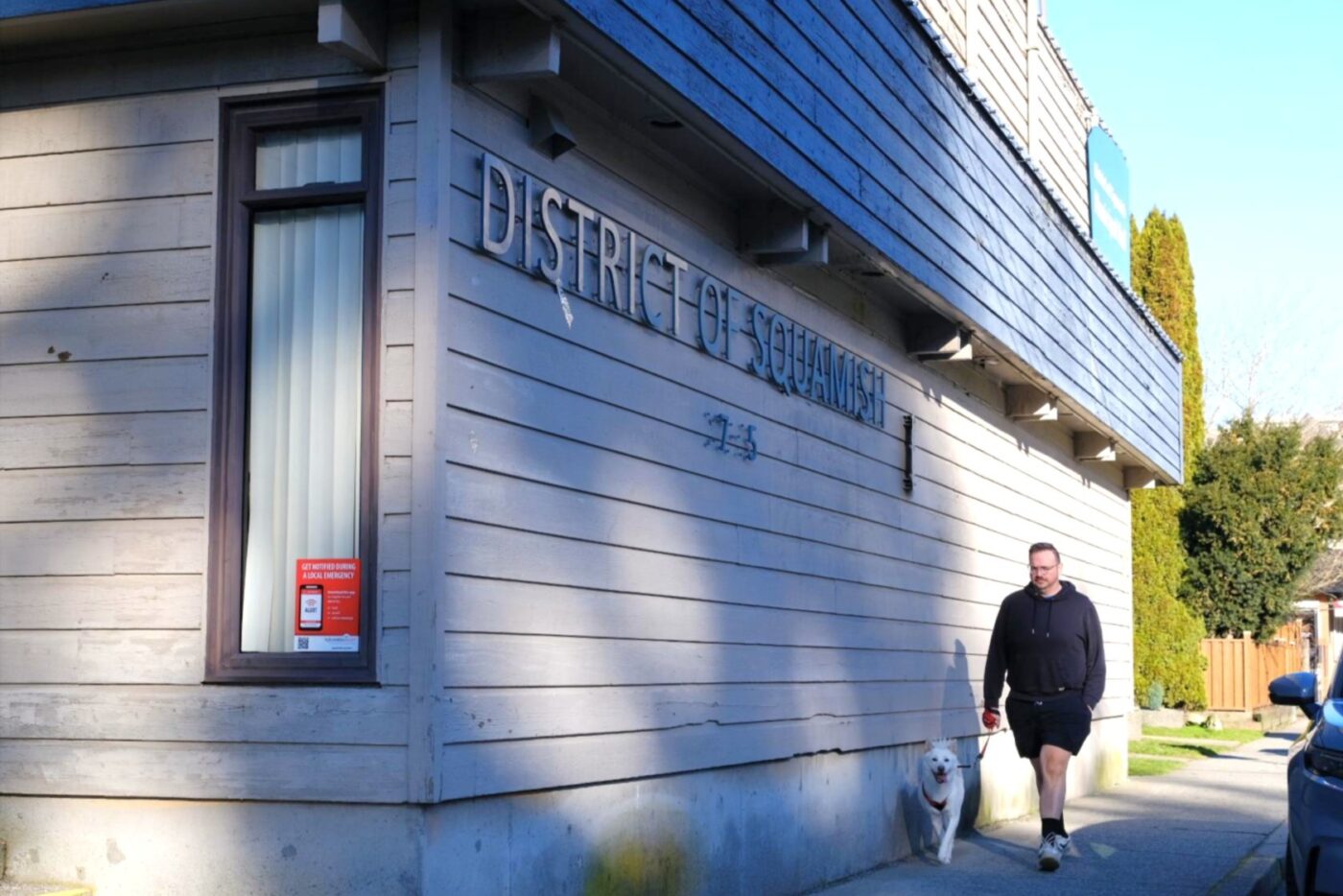
Only 99 of the 341 affordable housing units approved under Squamish’s Perpetually Affordable Housing Policy are currently occupied, a gap that drew pointed questions from councillors this week as District of Squamish staff kicked off a nine month review of the policy first adopted in 2020, at the July 14 council meeting.

Staff also confirmed a key piece of the original framework never worked as designed. The policy called for units to enter a head lease with the district, which would then sign operating agreements with non profit providers, but that never happened. “My understanding is that there were some legal risks with requiring that developers enter an agreement with the district,” said Jessie Abraham, a housing and development consultant, on behalf of the community development department.

Several councillors said the word “affordable” itself has become a problem worth dropping from the policy’s title. Councillor John French, who chaired the meeting, said the term “has just completely lost all meaning and in some cases has become the equivalent of a four letter word.”

Councillor Jenna Stoner pressed staff on whether rental rates, set at roughly 30 per cent of median income, are reaching the people who need them most, given how high median income in Squamish has climbed. “There’s a risk that the rates that we’re setting… is maybe actually not as attainable as we thought it was going to be for those who really need it in our community,” Stoner said.
Visibility of the units also came up. Councillor Stoner noted that when the first roughly 50 units came online, “our community didn’t know that there were 50 below market affordable units available in our community. It was kind of happenstance.” Several councillors compared this unfavourably to Whistler, where residents widely recognize the Whistler Housing Authority by name.

Affordable homeownership proved divisive. A homeownership housing agreement template was brought to council in 2025 but was not endorsed, and staff said they remain unsure how affordability could be locked in permanently or how resale prices would be regulated long term.
Mayor Hurford wanted homeownership kept in the research phase with a clear check in point down the road. Councillor Hamilton backed continuing to pursue a homeownership model but favoured a simple pricing formula, such as purchase price plus inflation. Councillor Greenlaw was more skeptical, saying current housing costs make the model “quite prohibitive,” while still wanting the door left open.
Governance also drew scrutiny, with councillors including Councillor Hamilton and Councillor Greenlaw calling for a clearer definition of what counts as a legitimate affordable housing operator. Councillor Greenlaw said operators “should definitely be arm’s length from developers.”
On measuring success, the committee chair proposed tracking “employee satisfaction for the frontline staff administering the units in these programs,” arguing that high staff turnover would itself be a warning sign. Staff confirmed the district currently only tracks what developers report through mandatory annual declarations, with no broader monitoring in place.
The committee also directed staff to include the broader public as a stakeholder group in the engagement process, a shift from the original plan that focused only on developers, non profit operators and current tenants.
The committee voted unanimously to endorse the proposed scope of the review, which is budgeted at $25 000 through provincial capacity grant funding. Staff expect to bring a “what we heard” engagement summary to the next council in January 2027 and a finalized policy update by June 2027.