


Obstructed visibility, communication gaps, and lookout practices contributed to a December 2024 collision that sank a workboat at the Woodfibre LNG construction site, according to a Transportation Safety Board of Canada report released September 29.
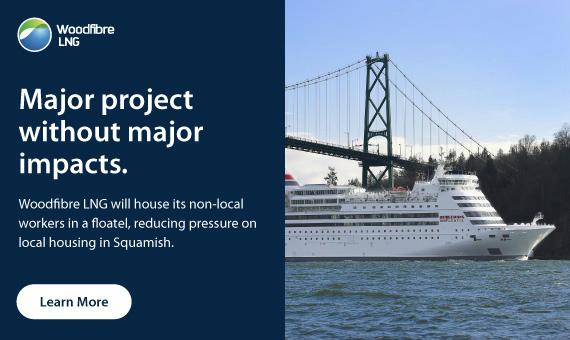
The tug Haisla Northwind was pushing the barge BSG Lubricator, which carried provisions for the project’s floatel, Isabelle X, when the barge struck the idling workboat Triton 1 on December 18, 2024.
Reach local customers in Squamish and Sea-to-Sky. Advertise with The Squamish Reporter
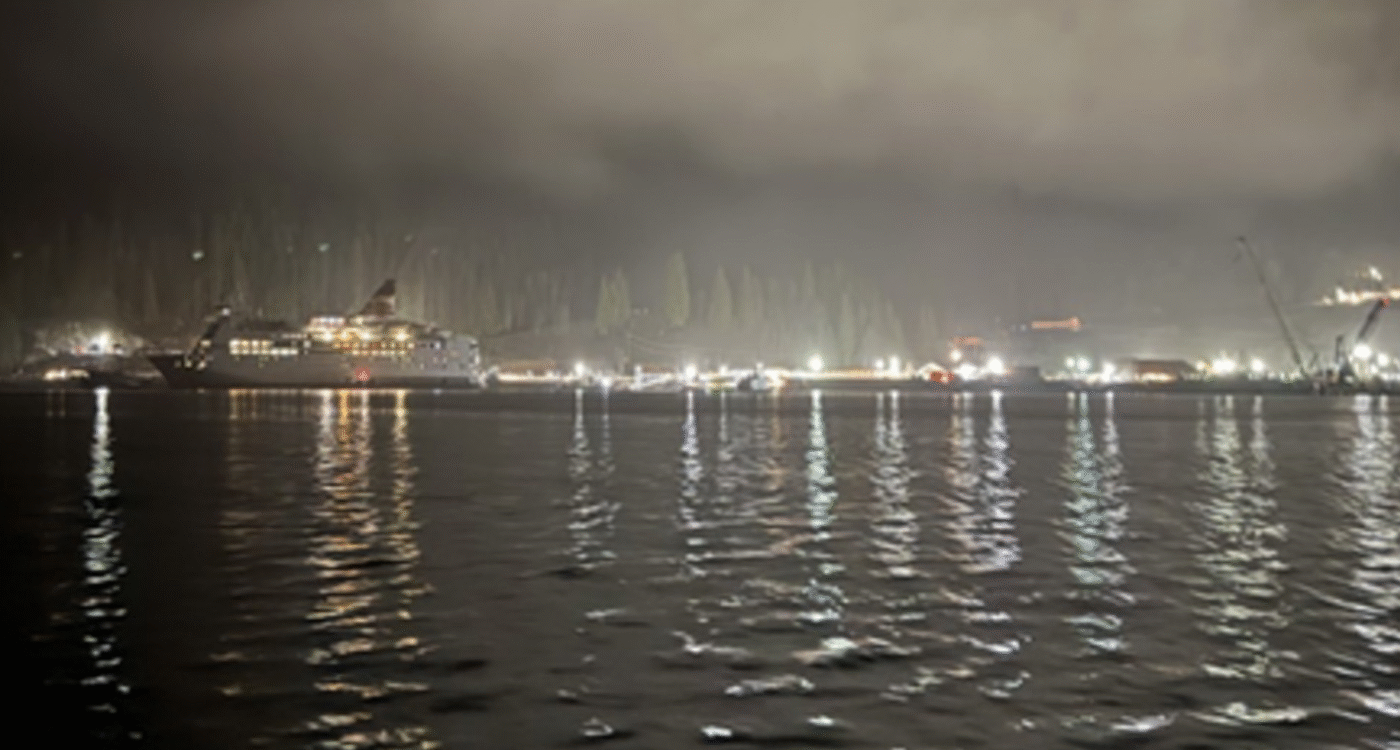
The collision occurred in the project’s marine safety zone in Squamish Harbour. The workboat capsized and sank to a depth of approximately 200 metres. Its operator, the only person aboard, was rescued by the nearby workboat Roe 5 and treated for hypothermia.
The TSB found that neither the tug master nor the workboat operator recognized the risk of collision before the vessels struck.
A crane on the tug and containers on the barge obstructed the tug master’s forward view. Bright lights from the construction site and nearby vessels reflected off the water, making the workboat’s navigation light harder to distinguish, the report says.
The tug master was primarily navigating by sight as he approached the floatel and expected other vessels to be aware of his arrival. Two crew members were preparing to take lookout positions on the front of the barge, but the collision happened before they reached those positions.
The workboat operator was facing the floatel, away from the approaching tug and barge. He expected his navigation lights to make the vessel visible and had heard no radio message announcing the tug’s arrival. A cellphone call shortly before the collision likely diverted his attention from keeping a lookout, the report notes.
Reach local customers in Squamish and Sea-to-Sky. Advertise with The Squamish Reporter
Investigators could not determine whether the tug master broadcast an arrival message on the site’s VHF radio channel. Neither the floatel’s bridge team nor other Roe personnel working on the water received such a message.
The report also identified gaps in how contractors and subcontractors shared and managed safety information.
Tug crews had informally raised concerns with management about obstructed visibility and glare from shoreline lighting, but those hazards had not been addressed before the collision. A refrigerated container added to the barge in November 2024 had been assessed for its effect on stability, but its effect on visibility from the tug’s wheelhouse had not been assessed.
The tug and barge schedule was shared with personnel at higher levels of the contracting structure but did not reach Roe Environmental, which operated the workboat.
Roe workboats had developed a practice of idling south of the floatel while on standby, partly because of limited dock space and the need to respond quickly to marine mammal monitoring duties. The tug master was unaware of that practice. The workboat operator, in turn, was unaware of the tug crew’s lookout practices.
The TSB said these separately developed routines created risks that were difficult to detect until the operations intersected.
Following the collision, Bridgemans Services Group restricted barge movements to daylight hours, stationed lookouts on the barge’s forward deck for the entire voyage and installed cameras and a thermal imaging system on the tug.
McDermott introduced additional communication and traffic-check requirements and installed automatic identification systems on project vessels, except punts. Roe introduced cold-water immersion training and required marine mammal observation vessels to have at least two crew members at all times.
The TSB credited the Mayday call, nearby support vessels and their quick response with helping the workboat operator survive. The Triton 1 was not salvaged. Minor pollution was observed, and spill containment booms were deployed as a precaution.
The board investigates transportation occurrences to improve safety and does not assign fault or determine civil or criminal liability. The full investigation report is available online.