


Editor’s Note: Support the Squamish Reporter with a small subscription
District of Squamish’s May 12 council meeting ended with presentations from the BC Energy Regulator and FortisBC about the under construction Eagle Mountain Gas Pipeline going through Squamish. Protesters sat in on the meeting holding up signs saying “Stop FortisBC, Fracked gas at work.”
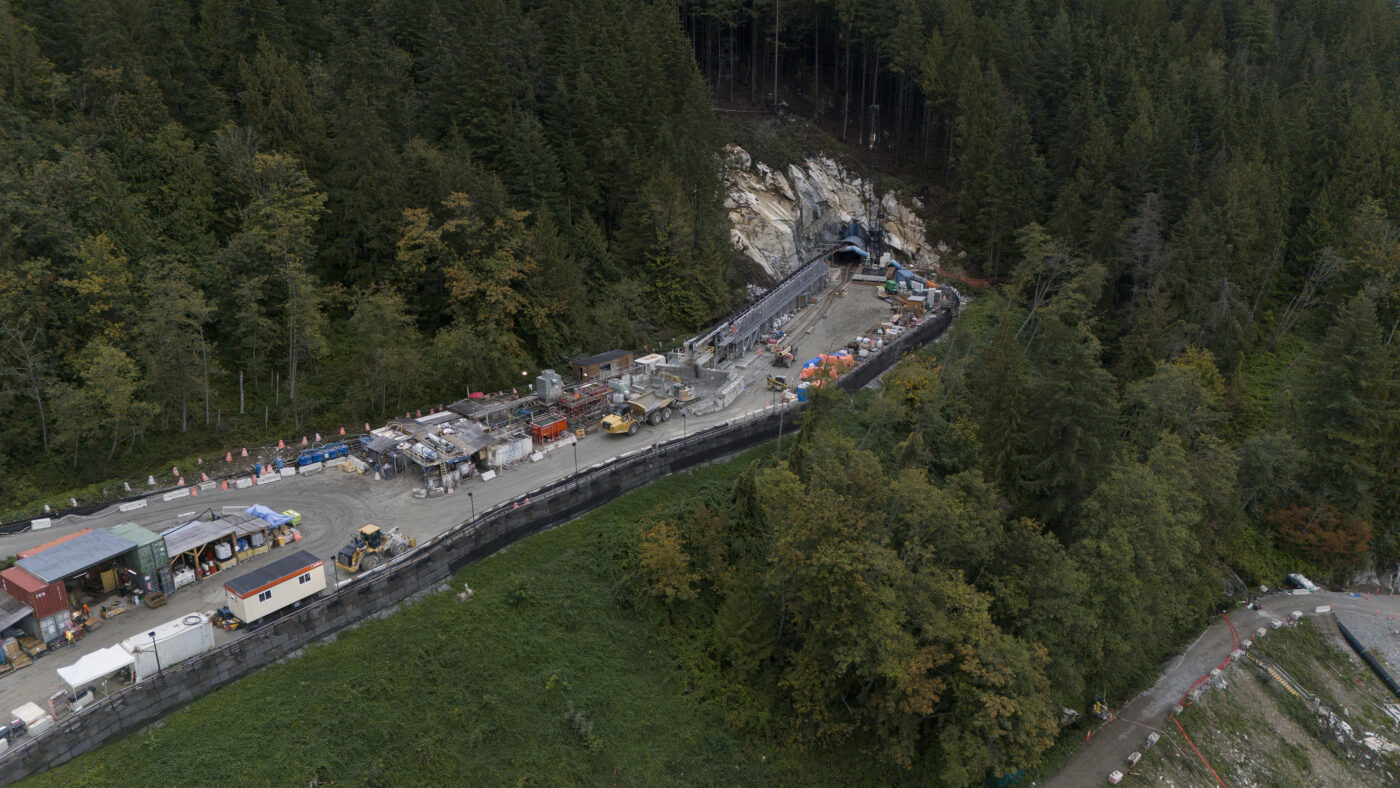
 The presentations were arranged to give FortisBC and the BCER a chance to present on the safety of the Eagle Mountain Gas Pipeline, which has been under construction since August 2023. The project threads 50 kilometres of new pipeline between Squamish and Coquitlam. The pipeline travels underneath Finch Drive, goes through a tunnel beneath the Squamish estuary and under Monmouth Mountain to the Woodfibre LNG site. Fortis BC said that the pipeline component is roughly 60 per cent complete, while the tunnel component is approximately 85 per cent complete. The whole project is expected to finish in 2027.
Council arrived with many questions for BCER and for FortisBC. Councillor Pettingil cited reporting from the Narwhal that alleged over 1,000 potential infractions left unchecked across the province, and reporting about FortisBC discharging excess effluent during tunnelling. Many councillors described what they saw as a pattern of permit amendments instead of enforcement on industry and that trust in the BCER regulator badly eroded.
 “We hear all the things about all the assessments and regulation that’s supposed to be happening. But what we’re seeing is not that. How do we have confidence in our regulator, or you folks, that we can actually trust any of what’s been presented to us? Because what we see on the ground is, quite frankly, quite the opposite,” said Councillor Chris Pettingill.
FortisBC’s senior project team laid out their safety case. The pipe was manufactured in Germany to specifications only that mill can meet. Every weld along the route, numbering in the thousands, was examined by ultrasound or X-ray. The 113,000 square metres of pipe surface, which the team compared to roughly 14 Squamish Walmarts, was checked for imperfections before going into the ground and will be pressurized to more than twice its maximum operating pressure as a final test.

The company also voluntarily designed the pipeline to a Class 4 standard, the highest classification under Canada’s pipeline safety code (CSA Z662), even though Squamish’s current density would normally require only Class 3.
“The pipeline is designed already to the highest possible standard,” said Paul Chernikhowsky, FortisBC’s Director of Technical Risk and Governance for the project.
Several councillors asked for a quantitative risk figure for areas near the pipeline, comparable to the probabilities the district already uses for flood, debris flow, and wildfire risk, so they can do their jobs as land use planners. The pipeline runs through areas where the district decides what gets built and how dense it can be. Without a number, they said, they cannot meaningfully plan.
“I’m looking for a number that I can use to compare the risk associated with being located near the pipeline versus at the bottom of a debris flow hazard, versus at the bottom of a 45-degree slope,” said Councillor Hamilton.
 FortisBC declined to release detailed risk figures for specific locations along the pipeline route, saying doing so could reveal system vulnerabilities that could be exploited by bad actors. The relevant thresholds, they said, are publicly available in a CSA standard accessible through the CSA website.
The BCER’s capacity to monitor the project locally also drew scrutiny from councillors. The regulator’s compliance and enforcement team for major projects in this region consists of five officers based out of Terrace. When asked directly whether any compliance staff are based south of Prince George, the answer was no, though the BCER noted engineers and technical staff in Kelowna and Victoria can travel to site.
The session ended with two motions passing unanimously. The first received both presentations for information and directed that BCER and Woodfibre LNG be invited back once the LNG facility submits its flaring permit application. The second directed the council to write to both the BCER and Woodfibre LNG requesting five specific technical data points about the proposed flare stack, to be shared directly with researchers at UBC and UVic who are modelling potential air quality impacts.
“There’s a lot of discomfort in our community around this project specifically, and especially around the flaring piece, which hopefully we will talk about at a future date,” said Councillor Greenlaw.
Editor’s Note: Support the Squamish Reporter with a small subscription


Stop Woodfibre LNG from polluting Howe Sound.